

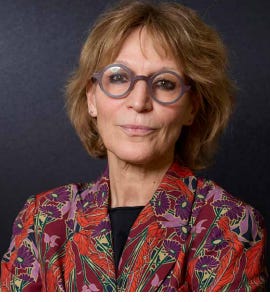
We’re glad that Agnès Callamard has written the foreword to this year’s Davos report. Here we republish her urgent reflections on the twin crises of authoritarianism and wealth concentration—and why people around the world are already mobilising to defend freedom, dignity, and equality.
The world is not approaching a crucial tipping point: we are in it.
For many years, Amnesty International has warned of authoritarianism growing across and within countries. Evidence from the last year shows how this process is accelerating, and fast. One year on from the inauguration of President Trump, we have seen around the globe how leadership that prioritises military investment and foreign policy deal-making and rejects human rights protections and multilateral commitments is multiplying, and this has done dangerous damage to the hard-won equality, justice and dignity gains of these past 80 years the world over.
Equally for many years Oxfam has drawn our attention to the growing inequality emergency, with the relentless rise of the super-rich. As this report shows, this process too has accelerated; over the last year billionaire fortunes have risen three times faster than they have in the five years since 2020. The first trillionaire is on the horizon. Meanwhile one in four people are regularly worried about not having enough food to eat, having to skip meals to get by, and ordinary people’s lives are becoming impossible to afford.
Authorities in a broad sweep of countries have employed authoritarian practices and introduced new measures to restrict freedom of expression, association and peaceful assembly. They have used these, and existing laws and regulations, to clamp down on human rights defenders, critics and opponents, or as a way to evade accountability and defend the economically powerful.
In an all too familiar tale, the brunt of this repression is born by those with the least buffer, with union organisers, environmental defenders, women, racialised, indigenous and LGBTQI+ people around the world being forcibly disappeared, arbitrarily detained or killed for their activism.
As this report clearly shows, these two deeply concerning trends of growing authoritarianism and rising inequality are not separate problems. They are not distinct dilemmas. They instead deeply entwined, as governments across the world side with the powerful, not the people, and choose repression, not redistribution.
It is imperative that our hard won-civil and political rights – freedom of assembly, freedom of expression and freedom to organise – are protected. Protest is a cornerstone of fair and democratic societies, it is a critical bastion against authoritarianism. It is equally important that the social and economic rights of all are fulfilled; rights essential for living a life with dignity, covering basic needs like food, water, housing, healthcare, education.
It is view, confirmed by the facts, that central to the realisation of all these human rights must be a rapid reduction in inequality; the gap between the super-rich and the rest of society must be closed, and fast.
The good news is people around the world are not sitting idly by as billionaires and authoritarians corrode the foundations of our freedoms. Inequality and tax justice advocates are demanding action on inequality, and specifically on the taxation of the super-rich. A UN tax convention is on its way to becoming a reality, led by Africa. From Malaysia to Madagascar, Nepal to France and the US – people are leading the way with - less a wave - and more a tsunami of global protests confronting the rise of the far-right, calling for a change to corrupt governments, who prioritise profit over people and facilitate the dominantion of the super-wealthy over the lives and liberties of everyday people.
Resisting the Rule of the Rich from Oxfam is a fearless and timely reminder of what is at stake, what is already lost and what is left to protect from the insatiable grasping hands of the billionaire class. Oxfam reminds us all that a new and more equal world is possible. It is time to organise, mobilise – and take it.
END.
Author: Agnès Callamard is the Secretary General of Amnesty International.
Powerful framing on the entanglement of authoritarianism and inequality. The shift from "redistribution to repression" cuts right through the noise. I've noticed in recent policy debates how quickly economic grievances get reframed as security threats, which then justifies crackdowns on organizing. The part about LGBTQI+ and indigenous activitsts bearing the brunt is spot-on and rarely gets coverage.