


Have you ever had the experience of speaking to someone about a problem, where you furiously agree that this thing is what is wrong with the world, but when you move to solutions, they think the complete opposite? If you’ve ever been out campaigning and tried to persuade someone how to vote, you’ll know the feeling.
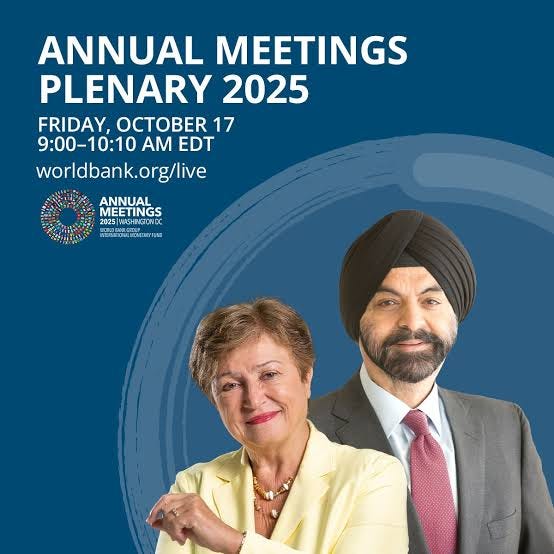
I felt that way last week in Bangkok, Thailand, at the Annual Meetings of the World Bank and IMF. Let’s take the IMF first. I went to a press conference given by Kristalina Georgieva, the Managing Director of the IMF. Her diagnosis: the world since 2020 has been very unstable and subject to a series of crises that have led to global economic shocks (COVID-19, energy and food shocks caused by wars, inflation and interest rate shocks, huge cuts to aid and trade wars). In response to these crises, governments have seen debts rise, either as they borrowed more where they could to help their populations have enough food or survive a global pandemic, or simply because their borrowing costs rose sharply with global interest rates.
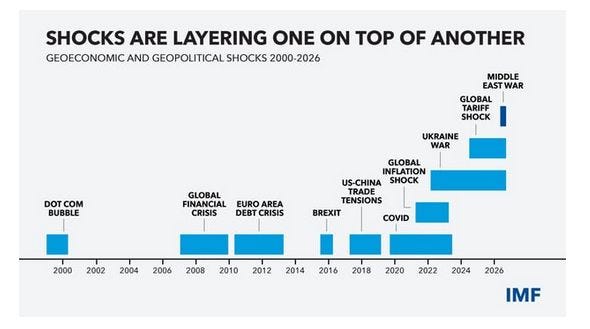
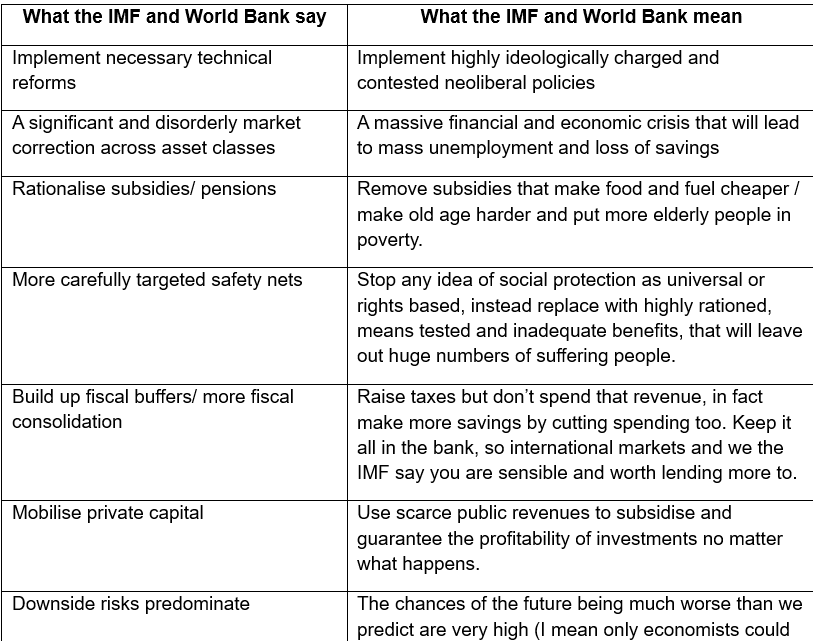
This has left many countries, rich and poorer, on the edge of bankruptcy. What is worse, Georgieva said, is that we are long overdue a financial crisis. It has been almost 20 years since 2008, and even if we are not yet seeing an AI bubble, we should still be expecting a ‘significant disorderly market correction across asset classes’ to use IMF speak- in plain English a massive financial and economic crisis that could lead to mass unemployment and loss of savings.
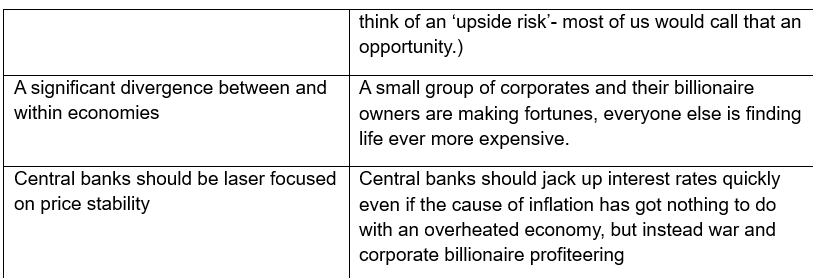
(The IMF and World Bank are so good at developing new anodyne phrases to paper over recommendations that can literally kill people living in poverty, particularly women, racialized groups, the elderly and children. I have put a few at the end of this blog, and I am sure readers will have many others).
I found myself nodding at this diagnosis. It is exactly how I would describe what has happened since 2020. But then from there to Georgieva’s solution: all governments who find themselves in this position must implement massive austerity now, before things get even worse. Tax rises and cuts to public services should be ‘frontloaded’.
Furiously agreeing with the World Bank too.
For Ajay Banga, the World Bank President, there was one clear message for the Annual Meetings: the urgent need to ‘mobilise private capital’.
Like Georgieva, Banga also mentioned how governments are in a financial bind – particularly donor governments, their largest shareholders. Debts are high and there is very little public money to go around, and as a result, aid budgets have been slashed.
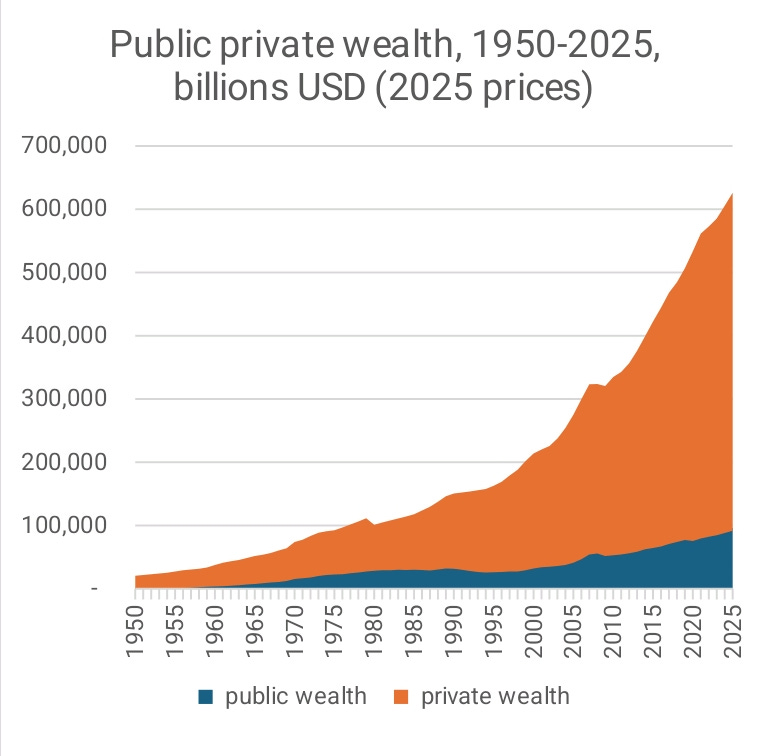
Yet at the same time, the world is awash with money. Private wealth, or capital has shot up; there is really an immense amount of private capital in the world. Humanity in this sense has never been richer. Banga’s solution is to mobilise this private wealth for the good of everyone.
Again, I found myself in agreement that we must make better use of that huge amount of private capital. But then his solution. Not taxes. Not rebuilding public wealth. Instead, the solution is that we need to use more public money and borrowing to ‘leverage private capital.’ Again, this needs translation. This means using public money to sweeten deals to such an extent that the private sector will invest in public goods by guaranteeing rich private investors a large enough and reliable enough profit.
You might think to yourself how could more borrowing be the solution to a debt crisis? I also think that is a fair question. The public answer is that these investments will drive such wonderfully high levels of growth and job creation, that increased public revenues will easily cover subsidising and guaranteeing the profits of private sector investors. (Another more honest answer I heard from one official is that expanded lending from the World Bank can be used by governments to pay off their much more expensive debts to private creditors, which would reduce their borrowing costs (and of course bail out the same private creditors).
Capitalist Buddhists
Maybe because I am quite old, and I have been to quite a few of these kinds of meetings, I was struck most by their almost wilful amnesia. A deliberate self-blinkering that makes them only look at the world as it is now. They ask very few questions about how we got here. No questions at all about what happened when countries tried their solutions in the past. Equally very few questions about what doing what they say will do to our collective future, or what world taking their advice might lead to, given historical experience.
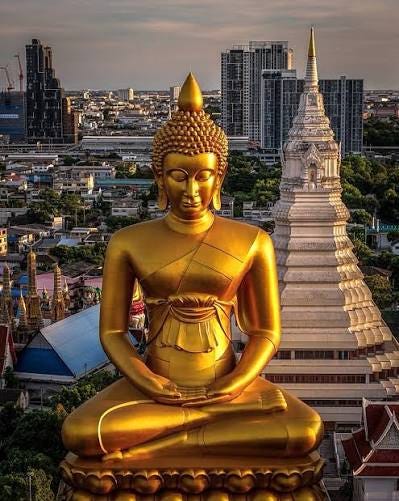
They are a bit like capitalist Buddhists, determined at all costs to live in the present. Perhaps in fact this is something central to capitalism itself, because if you don’t do this, then many problems and contradictions come flooding in almost instantly. They have to live only in the present, keep moving, forget the past, don’t dwell on the future.
Looking back, looking forward
We know looking back, that public debts began to rise after the last financial crisis. Huge public debts were incurred to bailout the banks and the financial system. We know that huge borrowing and money printing was done again in the face of the global COVID-19 pandemic. Some of this money was used to help ordinary people and small businesses survive, but more was used to prop up financial markets once more.
This huge injection of public money meant that far more money was chasing the same assets, so it led to sharp increases in the value of financial assets like stocks, shares, bonds, and also physical ones like housing, fine art or private jets. It was public money that in large part drove the explosion in private wealth in the graph above. This was not about billionaires being super clever or working harder. We know too that the ownership of private wealth, as well as income from wealth, is skewed dramatically to the richest, and this is particularly true of financial assets.
We also know, again thanks to the IMF’s own research department, and from the World Bank, that high inequality undermines growth, and that reducing inequality is good for everyone. We know from history how to reduce inequality, too – use policies like strong regulation of financial markets and capital, and high levels of taxation on the richest.
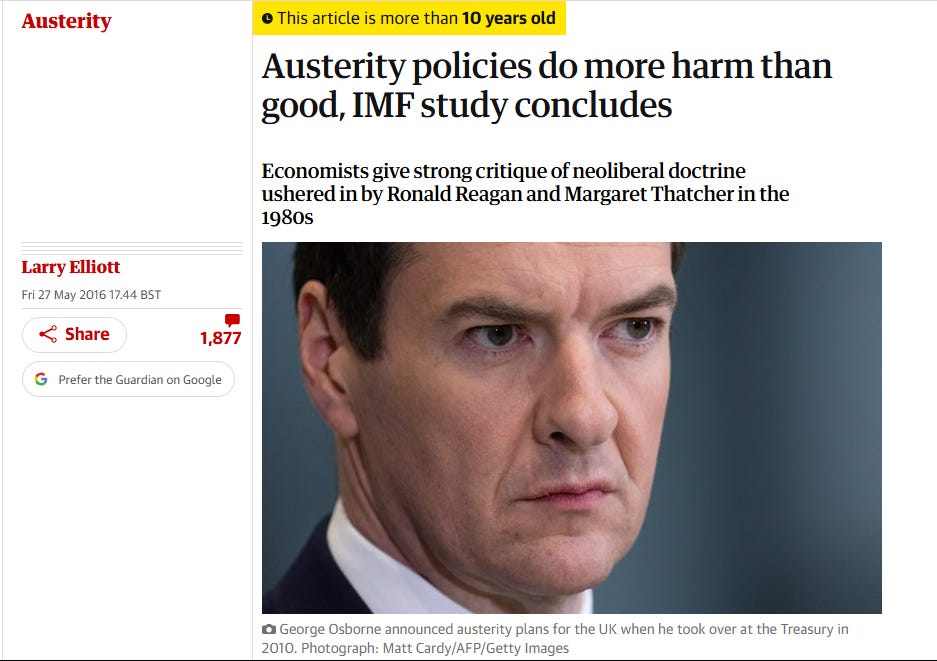
We know, too, that the solutions on offer are highly likely to increase inequality. The austerity of the 2010s in Europe, by the IMF’s own admission, was self-defeating, undermining growth, and driving inequality. We know, by the World Bank’s admission, that the brutal period of ‘structural adjustment’ in the 1980s and 1990s drove poverty and suffering. The IMF showed us how neoliberal ‘reforms’ also often drove inequality. We know, again thanks in part to research by both the World Bank and IMF, that climate breakdown is already undermining growth everywhere. There is also plentiful evidence from the World Bank, the OECD and others that so called ‘Public Private Partnerships’ to deliver public goods like health, or education, very often fail and are extremely costly to the public purse.
These solutions are working, just not for ordinary people
There is one additional thread that I think perhaps that explains this, beyond a self-imposed wilful amnesia. It is that all these actions proposed by the World Bank and the IMF do have a consistent beneficiary: private capital. Austerity might cause pain, but bondholders are guaranteed a return. Using more public money to bribe private capital might not actually work for the investments themselves, but it will guarantee returns in a volatile market. A consistent thread is perhaps ever more creative and innovative ways to denude public wealth and use public money to create and subsidise private wealth and private incomes.
Equally, other more obvious solutions like debt cancellations, forcing private creditors to accept losses, stronger regulation of capital markets, of tax avoidance, of illicit financial flows, much higher taxation of the wealth and income of rich people and corporations, public provision of education, health, transport etc., will mean a reduction in private wealth and opportunities for profit.
My feeling is that there is nothing wrong with private wealth. If it is fairly distributed, it is vital. Every family needs savings to help build a future. But public wealth is to my mind even more important. It is public wealth, democratically owned, that can build a more equal, sustainable world for us all. If we are constantly creating ever more private wealth by denuding public wealth, and if that private wealth becomes ever more concentrated in the hands of a tiny group of extremely rich people, then it hard to see a positive future.
(For the record, I have nothing against Buddhism or Buddhists, quite the opposite in fact. In my life I have found the Buddhist teaching of the need to live a lot more in the present moment to be very good advice. I just think that when it comes to the IMF and World Bank that they could benefit from being a bit more historically aware and a little less short-termist when it comes to the future, too.)
END.
Author: Max Lawson, Head of Inequality Policy at Oxfam International and EQUALS podcast co-host. He is also a visiting Professor in Practice at the LSE International Inequalities Institute and the co-chair of the Global People’s Medicines Alliance.