


Huge, unpayable debts are strangling the budgets of the countries of the Global South. Repaying rich creditors is put ahead of everything: health, education, and fighting climate change.
Complete complacency on the part of creditors is letting the problem fester, rather than acting now to tackle this crisis. That means more austerity for the populations of low-income countries, more people going hungry, more suffering for the sick, more care work for women, blighted futures for youths… and higher bills for creditor countries’ taxpayers when debt crises eventually flare up.
Debt in numbers
5.2 billion people live in countries where debt payments are higher than total social spending. The World Bank rates over half of low-income countries as “at high risk of debt distress” or “in debt distress”. The Sustainable Development Goals – UN targets to eradicate extreme poverty and reduce inequality – have become out of reach.
Climate finance hits a wall. While there are efforts underway to reform multilateral development banks in order to expand their lending capacity, too little attention is paid to borrowing capacity. At least 47 out of 66 low-income countries would need to take on too much external debt within five years to meet global climate and development goals. Climate finance should take the form of grants, not loans.
Meanwhile, rich creditors are doing fine, thank you very much. Rich private creditors earn a risk premium when they buy low-income countries’ sovereign debt. It is so high that they tend to make a profit even in the few cases of defaults. Debt Justice-UK estimates that rich bondholders of six countries that recently restructured their debt made an average profit of 38% (over the entire duration of their investment) despite the “haircuts” they conceded.
The G20’s debt relief offer is half-hearted. In the midst of the pandemic, the G20 postponed low-income countries’ debt payments, which was a good thing. It then created a permanent mechanism to forgive their unsustainable sovereign debt: the so-called Common Framework. This is completely failing to deliver.
Only four countries have applied for debt relief under the Common Framework. There are a range of reasons why overindebted governments fail to raise their hands to get relief:
Too little: The Common Framework is too stingy. After a country falls off the debt cliff, the Common Framework offers just enough relief to put it back right at the edge of the cliff, not at a safe distance. Zambia did get relief… only to remain “at high risk of debt distress”. The current review of the World Bank and IMF’s Debt Sustainability Framework is an opportunity to right that wrong.
Too slow: It took four years of excruciating negotiations for Zambia to get that relief – and it’s still negotiating with some marginal creditors. The Global Sovereign Debt Roundtable – an informal global governance body advising the G20 – has made progress to streamline and speed up debt restructuring processes. But creditors are responding with ever more complex debt contracts that are likely to complicate future debt restructurings.
Too risky: There is no equivalent to corporate bankruptcy law for sovereign debt. When a government fails to pay its creditors, the latter can sue in London or New York court (where contracts are usually signed) and almost certainly win. That shuts off debtor governments from global financial markets. The prospect of such lawsuits gives creditors huge leverage in negotiations with governments.
Too late: Debtor countries’ Finance Ministers tend to kick the can down the road and let their successors bite the bullet of debt restructuring, as they fear the credit rating downgrade (even though their low ratings already price them out of the market anyway) and perceive default as shameful.
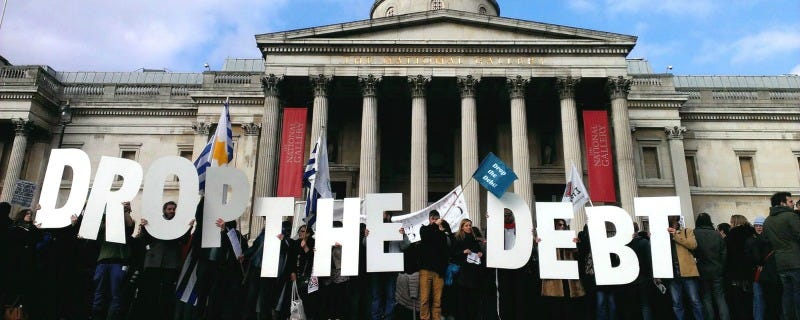
Twenty years ago, after a decade of the Jubilee 2000 campaign, creditor countries made a debt relief offer that debtor countries could not refuse: cancelling over $100 billion of debt. It is time to repeat that feat, otherwise the debt problem will continue to fester and stunt the fight against inequality and climate change.
This time, however, it will be important to complement debt cancellation with the creation of a legal framework for sovereign debt in order to stop the cycle of debt crises.
Something to read and listen to
Read this report by Matthew Martin and David Waddock about resolving the debt crisis.
Listen to Matthew on this week’s Equals Podcast

and read his blog
Debt Justice to Overcome the Inequality, Climate and Nature Crises

I have been passionate about fighting inequality since I was a child. I grew up in Africa, where the inequality between whites and blacks was shocking – and in some countries the black post-colonial elite were repeating the sins of their former colonial masters.