


The answer, according to the academic and author Kristen Ghodsee, who gave an incredible interview this week on our EQUALS podcast, is an emphatic ‘yes!’. This is no flippant point either but based on a large body of detailed academic research, both by her and many others. The former Eastern Bloc countries and the Soviet Union offered two fantastic opportunities for detailed comparative analysis, one during the Cold War looking at relations between women and men on both sides of the iron curtain, and one after the fall of communism when states like Russia rapidly became capitalist.
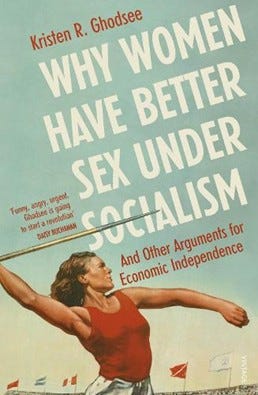
These studies show that for women under socialism, sexual relations were better, more fulfilling and more equal. The reason for this greater liberation in the bedroom is, according to K. R. Ghodsee, because women and men were far more equal overall in these societies. Critically, women were not nearly as economically dependent on men as they were in the West. State funded universal childcare, access to abortion and birth control, access to education, all radically reduced the unpaid care work of women and increased their economic independence. Women’s involvement in the workplace was far greater, women were scientists, engineers, even astronauts. Kristen grew up in the US, and aged 13 was inspired by Sally Ride, the first woman from the USA to go into space in 1983, only to discover that the first woman in space, Valentina Tereshkova, had gone up in 1963, 20 years before.

Valentina went on to become a global champion of women’s rights. Ghodsee documents how in the US, the government were seriously worried about the economic advantage women’s liberation was giving their soviet competitors and commissioned a series of comparative studies on this. More broadly, she shows how competition from the second world played a key role in driving governments in the first world to do much more to legislate and take policy actions that would increase gender equality and women’s economic freedom.
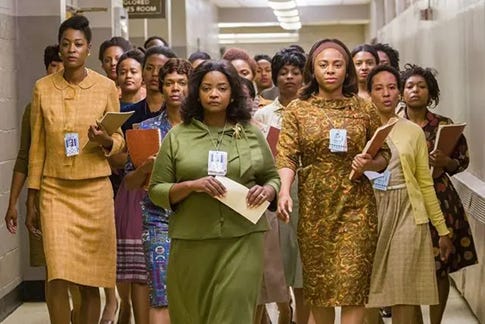
Of course, gender equality was very far from perfect under socialism, and the liberation of women was in part because it made sense economically, but there is no doubt that by a range of clearly empirical and objective criteria, women were genuinely much more economically and socially equal in these societies.
It was also very much at the core of socialist ideology from the beginning. International Women’s Day itself was the proposal of the incredible German socialist and feminist activist Clara Zetkin in 1910, building on the strikes of women garment workers in New York in 1908.
Just as in the west, ideals of democratic freedom, even though far from full realised in reality, put pressure on the countries of the east, so ideals of social equality and gender equality from the countries of the east, even if never fully realised, put clear pressure on the leaders of the west.
Money can’t buy you love
Conversely, when communism fell, and former Eastern Bloc countries adopted free market economies, economic and gender inequality rose dramatically. Women were forced out of the workplace, social safety nets were dismantled, while right wing nationalist politics encouraged a return to harmful gender roles. Women were increasingly expected to leave the workplace and return to their homes and forced to take on the unpaid care responsibilities previously taken on by the state, restoring men’s financial power within relationships. They were once more put in the position where they had to rely on men to survive, and as a result, sex, marriage and relations with men became again far more transactional. In a kind of deeply dark, 21st century version of Jane Austen, Ghodsee gives the example of new ‘gold digger academies’ in Russia. Aspiring gold diggers pay $1000 dollars a week in the hope of developing the skills to find themselves a wealthy male sponsor. Such sponsors are called ‘Forbses’ (after the Forbes rich list) and the women are called ‘tiolki’ or cattle.
This was not a simple snap back to sexist and misogynist ideas of ‘natural’ gender roles, artificially suppressed by socialism. There was nothing natural about this, but instead the answer lies in basic economics, Ghodsee maintains. The deep inequality and insecurity that free market capitalism brought is the key driving force.
She draws the link between this experience and the sharp increase in economic inequality under neoliberal capitalism in our modern world, and the concomitant, deeply concerning rise in misogyny, sexism, violence against women. The explosion in right-wing ideas and truly nasty high-profile figures like Andrew Tate and others, focusing on returning to some mythical ‘traditional’ role for women.
This is not simply an issue of scapegoating, or distraction, with young men encouraged to hate women and blame women for their lack of economic progress, although this is definitely a part of what is going on. For Ghodsee, it has a broader economic logic too, as when fewer jobs are available, and when governments are engaged in seemingly permanent austerity, it makes sense to push women out of the workforce, and to put them once again under the economic control of men.
This is not just about incomes but wealth too. Wealth is far more gender unequal than income, so the huge rise in wealth inequality, and in the importance of income from capital rather than income from work, also puts women back in a much more unequal position, with marriage being by far the most fruitful way in the US for a woman to get into the richest 1%.
Conversely, under socialism, and under the policies pursued by socialist countries, (as well as much more equal capitalist countries like Sweden or Denmark), gender relations were steadily and comprehensively decommodified, and relations between women and men were immeasurably better as a result, based on equality, not economic necessity.
This is not the only thing that is decommodified either; more equal societies, where things like health, housing and education are provided to everyone based on need, not on ability to pay, gradually take more and more of what matters in life out of the realm of money. Modern capitalism seeks to do the opposite, to put a price on everything, to turn water, health, education, clean air, greenspaces and even friendship and love into commodities to be bought and sold. In doing so, the inherent value of these wonderful things is strained, depleted and destroyed. Putting a price on something often devalues it, the point made by the philosopher Michael Sandel in his brilliant book, ‘What money can’t buy.’ I really agree with this. I feel personally, that the more of our common life we can take out of the realm of money and of driving profit for capital, the better it will be.
ENDS.
Author: Max Lawson, Head of Inequality Policy at Oxfam International and EQUALS podcast co-host. He is also a visiting Professor in Practice at the LSE International Inequalities Institute and the co-chair of the Global People’s Medicines Alliance.
Listen to our episode with Kristen Ghodsee here.
Capitalism vs Socialism: What’s Better for Women’s Rights?

Why do women’s rights advance in some societies — and decline in others?