


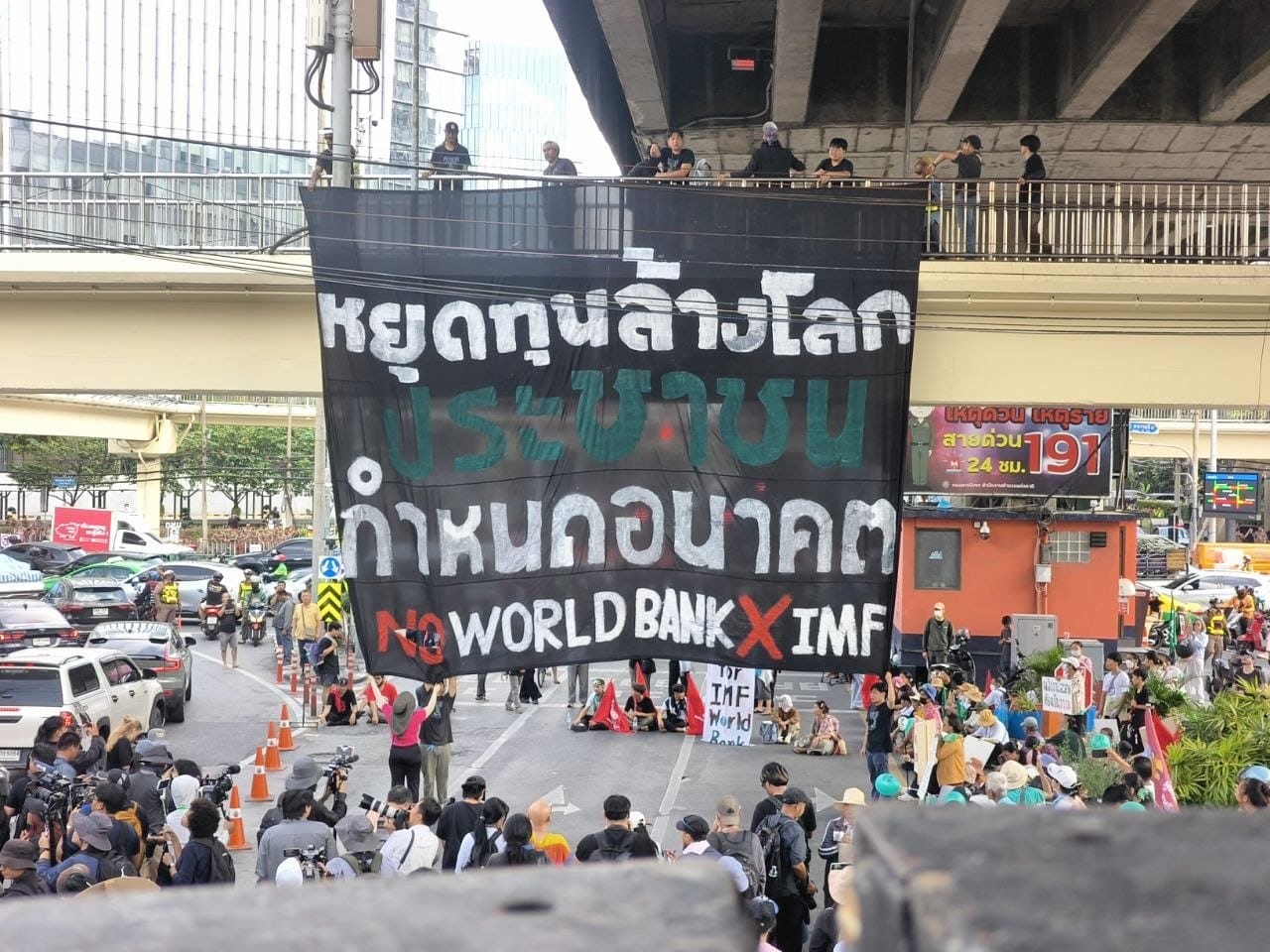
The IMF and World Bank Annual Meetings wrapped up last week, and at times it felt like we were back in the mid-1990’s and the bad old days of Structural Adjustment. The consistent message from the IMF all week was basically a call to all governments to tighten their belts, make cuts now, and slash social spending. Meanwhile, outside on the streets, protesters challenged the IMF and their economic poison dressed up as medicine.
There was no call from the IMF, for example, for greater debt cancellation or suspension of debt payments, and no push for a fresh issuance of the IMF Special Drawing Rights, which would channel new funds to boost the reserves of all nations (both of which happened during Covid-19 and really helped). There was basically no help on offer from the IMF and rich countries for those nations hit hardest, other than ‘advice’ on how to cut and slash most effectively.
This week’s Bulletin looks at how IMF austerity is hitting the countries most vulnerable to the economic fallout of the US/Israel war against Iran.
IMF required austerity…in numbers
Most IMF program countries face austerity. 28 countries have ongoing IMF loan programs; 24 of those are being required to implement austerity cuts.
Brutal cuts. In Ecuador and Guinea-Bissau, governments are being required to implement austerity measures equivalent to more than 4 % of GDP. By the end of Sierra Leone’s loan program, austerity measures will be five times its annual healthcare budget. Bolivia is being required to implement austerity worth 8.5% of GDP by 2029, about twice its annual healthcare budget.
Austerity for those most affected by war. Oxfam looked at the food, fuel and economic pressures before the war began, using indicators that might suggest their vulnerability to the fallout of the US/Israel war against Iran and compared these 24 countries with the rest of the world.
Food insecurity. 51% of people were moderately or severely food insecure in countries facing IMF austerity, 1.8 times more than in the rest of the world.
Access to clean cooking fuel. As a proxy for a fuel indicator (there’s extremely little data on fuel affordability), Oxfam found that 57% of people lacked access to clean fuels and technologies for cooking, around 2.4 times more than in the rest of the world.
Debt burden. External debt service was around 1.5 times higher than in the rest of the world.
In the face of falling aid. Overseas development assistance from DAC donors (some of the largest providers of aid) to these countries fell by 22% in real terms between 2021 and 2024.
Leaving countries vulnerable. IMF-imposed austerity risks leaving these countries even less able to withstand the fallout from the war against Iran and future shocks. Past crises have shown that cutting public spending during economic downturns can deepen poverty and inequality and push more people into hunger.
Front-loaded. As we revealed in the last Bulletin, the IMF recommendation of “front-loaded fiscal adjustment” is a euphemism for returning to the dark days of shock therapy, brutally cutting away social protection.
Something to read and listen to
Read how Oxfam is suing the French state over tax inequality
Read what Sam Wollaston learnt about excessive wealth, extreme emissions – and ecocide at Europe’s big superyacht show, quoting Oxfam’s research from a few years ago.
Read Rise in poverty is ‘a wake-up call for the world’, UN development chief