


Lesbians and Gays support the Miners
It was 1984. I was 12 years old, recording the pop charts religiously every Sunday on my shiny new cassette player. Every evening the family would gather around the television to watch the news. Every evening there would be stories of clashes between striking miners and their supporters and the police, with pictures of picket lines and running battles as the police attacked miners with truncheons and on horseback whilst they fought back.
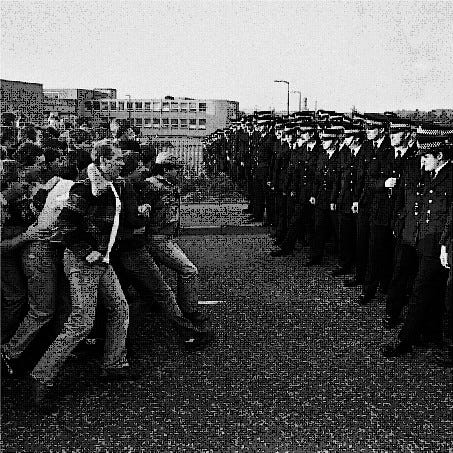
The miners’ strike of 1984-1985 was a huge moment in British history. It lasted just over 11 months. The miners had the widespread support of the entire working class in Britain. Workers who felt that they were all under attack from the new Conservative government, led my Margaret Thatcher.
In the early seventies, the miners had struck successfully for higher wages and managed to bring down the previous Conservative government at the same time, with power stations closing and electricity blackouts forcing the country into a three-day week and darkness every evening.
Mrs Thatcher and the Conservative party were determined to have revenge. They first stockpiled huge amounts of coal, drew up contingency plans to use the army, and then deliberately provoked the strike. They were intent on starving the miners back to work- this was no exaggeration either as miners and their families had to endure tremendous hardship, especially in the harsh winter of 1984-85. My wife’s best friend’s father was a Scottish miner, and although only four at the time she remembers the many ‘poor days’ when they could only eat beans on toast because daddy was on strike.
Many support groups sprung up to raise money for miners and their families. In London, members of/activists from the LGBTQIA+ community got together and formed ‘Lesbian and Gays Support the Miners (LGSM)’. LGBTQIA+ people in the UK were at that time subject to widespread discrimination, including in the workplace, often forced to live their lives in secret, or estranged from their families and subject to violence. The Conservative government under Mrs Thatcher also used state power to enforce this prejudice, banning the teaching of homosexuality in schools.
HIV/AIDS was also exploited to intensify homophobia, as growing numbers of young gay men started to die from AIDS-related illnesses, what was at that time a very poorly understood, feared, and incurable disease. Indeed, one of the founders and leaders of LGSM, Mark Ashton, died of the disease two years later in February 1987, aged only 26.
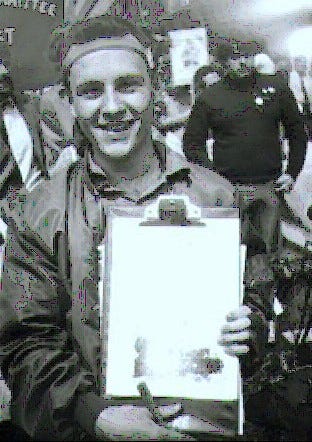
Pits and perverts
LGSM raised money from the LGBTQIA+ community in London and across the country for the miners; they provided support for a series of mining communities in the Dulais valley in South Wales. The Welsh valleys were one of the key areas of coal mining in the UK.
They took the money there themselves, staying with mining families and building relationships with the women and men organising and striking, and in turn miners came to London too, giving speeches at fundraising events, including a big concert in Camden London, where the Bronski Beat headlined (one of my favourite bands, then and now- their haunting synth pop song ‘Smalltown Boy’ about a young gay man having to leave his family and go to London is honestly one of the best songs ever). The concert was called ‘Pits and Perverts’, the name taken from a headline in the right-wing tabloid newspapers about LGSM and the miners.
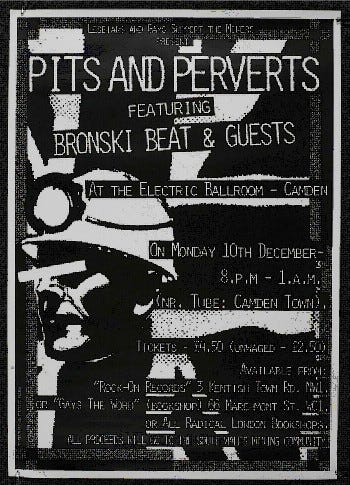
Solidarity
It is a beautiful story of solidarity- a word that is not heard or used enough these days, I think. A recognition that two communities and movements, miners and the LGBTQIA+ community had far more in common than they had separating them.
Many of LGSM were themselves working class, and had grown up in similar communities, often experiencing prejudice and discrimination, but also very aware of the everyday realities of working-class life and struggle. Over the year, with the many visits, strong and lifelong friendships were formed, and walls of prejudice and division broke down through community and a common struggle.
Most importantly the two communities realised they had a common enemy. There is a scene in the wonderful 2014 film about LGSM, Pride, where one miner’s wife, who struggles with her homophobic prejudice, shows her husband a newspaper story about the gay community and HIV/AIDS. He says, ‘you know the lies they print about us miners daily-calling us the enemy within- why would you believe the lies they tell about these people?’.
This is the heart of solidarity: shared struggles without erasing differences, taking action knowing there is a cost of standing with others, especially when it is hard. It is about collective liberation, recognising that only in everyone’s liberation can you begin to transform conditions for yourself and for others. LGSM, despite their own huge struggles, chose to focus on supporting the miners, seeing their actions as part of a shared struggle.
The constant need to fuel division and hate
My own feeling is that prejudice, racism, homophobia, sexism; these are all things that need to be constantly maintained and manufactured; that they often rapidly crumble when people are able to meet, to talk and to understand each other better, to share common struggles. Not always of course- none of this is automatic or simple and prejudice can run very deep indeed. The point is more that I think there is definitely an ongoing need to prop up division, to constantly tell us that we have more that divides us than unites us.
I also feel that prejudice is actually perhaps more common within the upper and middle-classes. This is I think because of physical and financial distance from the ‘other’ and support for the status quo, plus often an additional level of class prejudice. These parts of society are also more likely to have the power to amplify and codify their prejudices through law and the media. For the working classes, it is true that competition for scarce jobs and public services is more common, and can be weaponised, but equally poverty, proximity and shared hardship can be a key source of solidarity and struggle too.
Victory in defeat
The miners lost the strike; it was a huge defeat, not just for them but for the whole labour movement and the working class in the UK. It is no coincidence that economic inequality shot upwards in the following two decades in the country, as the power of labour was cowed and the power of capital boosted.
But a year later, at the 1985 gay pride march in London, LGSM were joined by coachloads of miners from all over the country, who marched at the front of the Pride march. At the Labour Party conference that year, a motion supporting equal rights for gay and lesbian people was passed, in large part because of the unions coming in behind it in support, strongly pushed to do this by the National Union of Mineworkers.
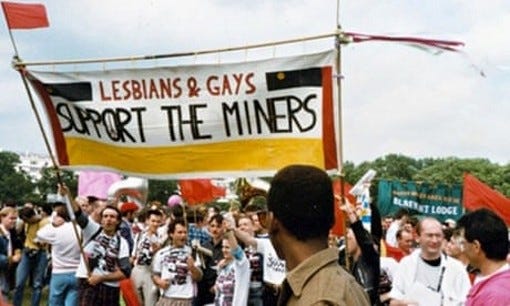
In the years since then, there has been huge progress in securing equal rights for LGBTQIA+ people, both legally and within society as a whole. For my kids at school now, listening to them discuss these things so openly, the level of prejudice of those years feels like another world. But none of this can be taken for granted. In the UK in recent years, as in much of the world, there has been a dangerous roll back of rights and growing levels of homophobia and transphobia, amid poisonous rhetoric from politicians and the media. As always, the protection and expansion of rights and freedoms requires constant vigilance and constant struggle.
END.
Author: Max Lawson, Head of Inequality Policy at Oxfam International and EQUALS podcast co-host. He is also a visiting Professor in Practice at the LSE International Inequalities Institute and the co-chair of the Global People’s Medicines Alliance.
Thanks so much to Amina and to Silvia for their help in writing this.