


One of the classic political comedies that we watched growing up was called, ‘Yes, Minister’ which pitted a UK Minister Jim Hacker against the bureaucratic intransigence of Sir Humphrey Appelby.
Sir Humphrey, the quintessential obfuscating bureaucrat. If you click on the picture it should take you to the clip.
It is timeless classic because it captures a feeling about the way bureaucracy and politicians interact. Bureaucrats run rings around the politicians to ensure nothing is ever done, and the politicians are weak, self-interested and easily hoodwinked by the bureaucrats. You are left laughing about just how inept government and politicians are.
In more recent years, there have been a rash of new political dramas, for example ‘The Thick of It’ about UK politics or ‘Veep’ about US politics. ‘House of Cards’, was originally made by the BBC about UK politics was successfully transposed to the US. In Brazil, the show ‘O Mecanismo’ or ‘The Whirlwind’ in Korea were both very negative, portraying politicians and politics as broadly corrupt and self-serving.
What all these programmes have in common is an even deeper cynicism about politicians and government. They tend to focus on the self-interested motivations of the characters, and through this, focus on traits of ‘artifice, pandering, deceit and positioning for advantage- in general mistrustfulness’. If values and morals are mentioned, it is usually to be derided and mocked, mainly as weaknesses.
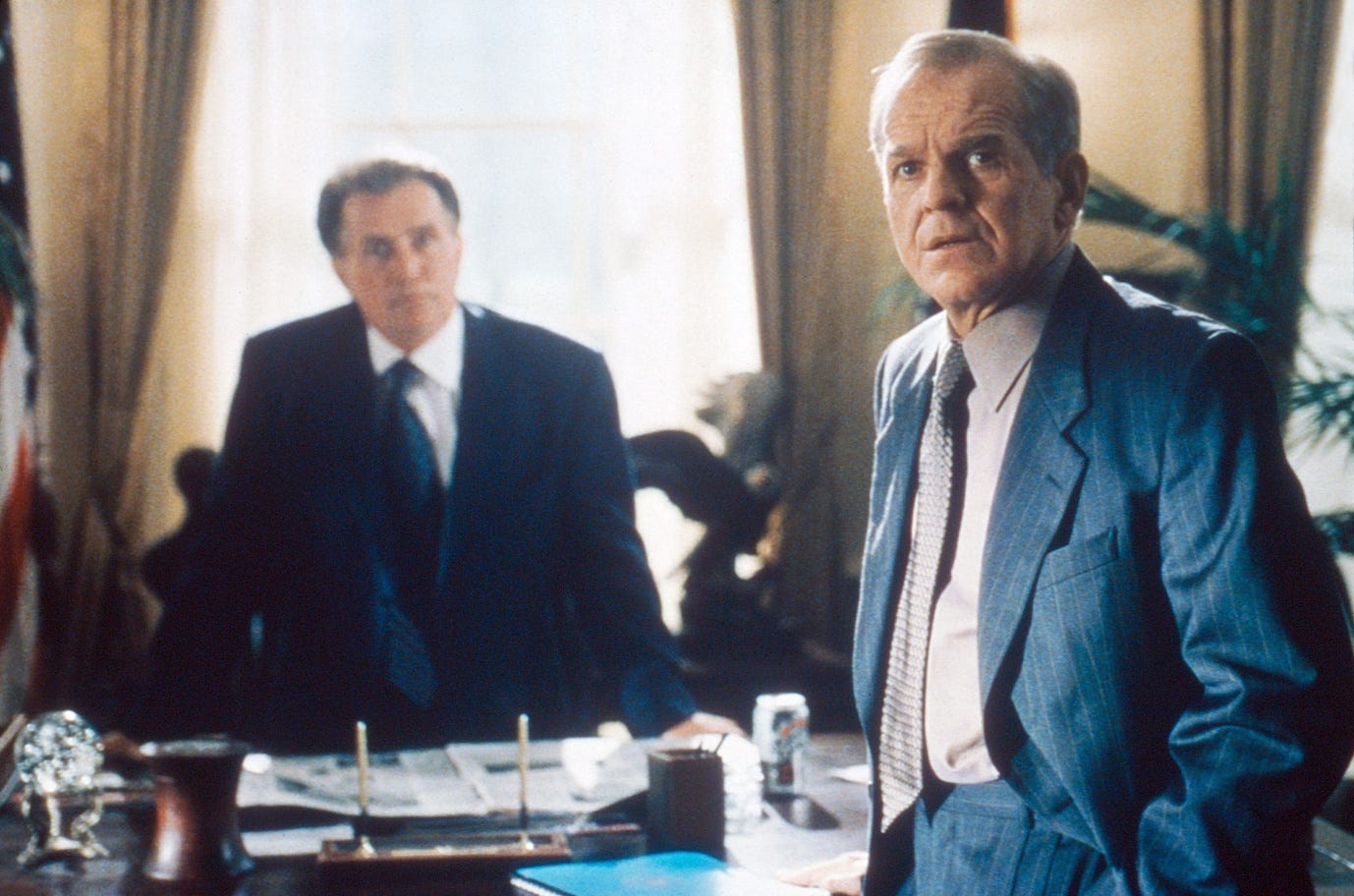
The West Wing- I have always striven and entirely failed to be as cool and unflappable as Leo (right) the Presidents Chief of Staff
Not all political dramas are entirely cynical; ‘Borgen’ in Denmark started off pretty idealistic- although it did get increasingly cynical as the series progressed. Another wildly successful series was ‘The West Wing’, which was about a pragmatic but progressive and value driven US President and his team trying to do his best to make the world a better place. It was felt by many at the time to be Hollywood’s answer to the real-world disappointments of the Clinton and Bush Presidencies.
One scientific study actually measured participants level of cynicism before and after watching episodes of ‘The West Wing’ or ‘House of Cards’ and found that House of Cards did increase people’s negativity about politics considerably.
Who benefits most from people becoming cynical about politics and politicians?
I think arguably broad cynicism with all politicians and government benefits those on the right of the political spectrum more than the left. Such cynicism drives down participation in democracy and a belief that voting can ever make a difference. Usually, the first to stop voting and exercising their democratic rights are the poorest people too.
As perhaps further evidence of this, ‘Yes Minister’ was one of Mrs Thatcher’s and Friedrich von Hayek’s favourite programmes. It was co-written by Anthony Jay, who was a close collaborator with right wing free market think tanks, and a speechwriter for Conservative politicians.
Well organised democratic politics is I think the most powerful yet peaceful mechanism ever invented to put the brakes on runaway capitalism and extreme inequality. It follows that anything that drives up political apathy and drives down political participation ultimately harms politicians on the left more than the right, as even if politicians on the right lose trust, the outcome is more power given to market forces.
Is art just imitating life?
But are these dramas just reflecting reality? Are they just showing us, in very funny ways, the reality of politicians, as entirely self-serving? I think many reading this will be thinking that these comedies are holding up a dark mirror to a dark reality; that politicians are indeed all the same, and united in their dishonesty, ambition and self-interest.
My own feeling is that this is neither fair nor accurate.
This is not to deny that in many countries, all leading politicians are terrible. That is clearly the case, and depressingly often. But just because it is often the case empirically, doesn’t mean that it is somehow an a priori fact. To put it another way, the fact that all of today’s politicians are useless and cynical does not mean we can conclude that all politicians are useless and cynical at all times and in all places.
(Arguably too this could in some ways become a self-fulfilling prophesy, as the more that politics is presented as an entirely cynical endeavour, the more it is likely to attract those the kinds of characters who operate primarily in this way, and the more it is likely to put better, more value driven individuals off pursuing politics- what has been described elsewhere as a spiral of cynicism).
Equally, just because politicians exhibit self-interested or other behaviours, does not mean that this is their only, or even their main motivation. We know from life, that unlike Hollywood, people are complicated; people do things for multiple reasons, often combining both values and self-interest.
Even the most moral politicians need to be good at politics
I would also say that political skills are essential for a good politician, which might seem obvious, but is an important point. The best politicians need to find ways to out manoeuvre their opponents and out communicate them too. Skills of building constituencies of support, of deal making, compromise, strategy- all of these are important if politicians are going to secure real change. The key thing I think is not that these skills are bad necessarily, but that they don’t become an end in themselves, but are instead deployed with the aim of securing real, progressive change. It is also pretty useless arguably to have unimpeachable moral values and commitments but never have the political skills to really achieve anything. Politics free values are as ineffective as value free politics in many ways.
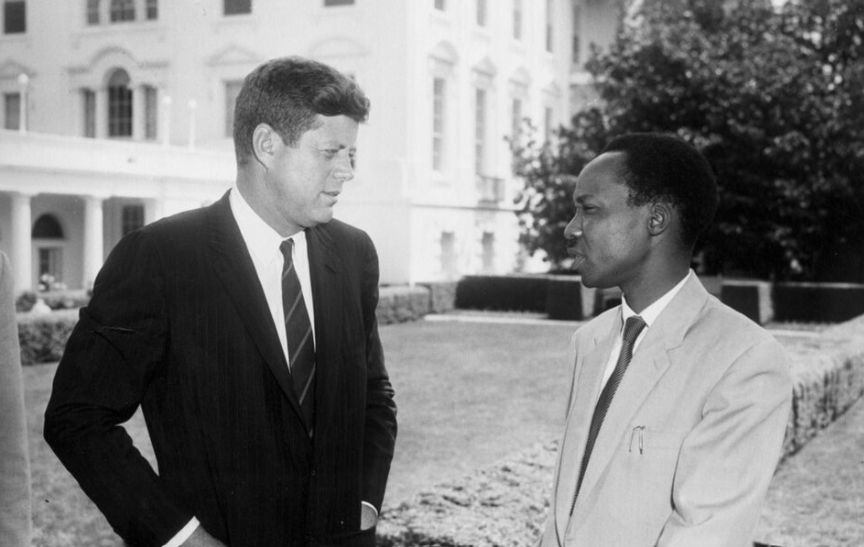
Julius Nyerere, first President of Tanzania, with President John F Kennedy
If you think of the most successful, progressive politicians in history, whether independence leaders like Nehru in India or Nyerere in Tanzania, or progressive leaders like FDR in the US or Clement Attlee in the UK, all of them combined strong political skills with a strong commitment to building a better world for ordinary people. They were not saints, but neither were their actions reducible to naked self-interest either. On the other side, I think right wing politicians like Mrs Thatcher cannot be simply reduced to cynical self-interest; they were also driven by values too.
Defending Democracy
The recent summit hosted by Spain in Barcelona of world leaders coming together to defend democracy was to my mind a good example of politicians collectively pushing for a better world. The Prime Minister of Spain, Pedro Sanchez, has been particularly vocal in his opposition to war, and championing of the fight against inequality. He is clearly driven by values, but at the same time is an extremely successful politician who has managed to side-step many seemingly existential threats to his career and his government and consistently deliver progressive policies in Spain.
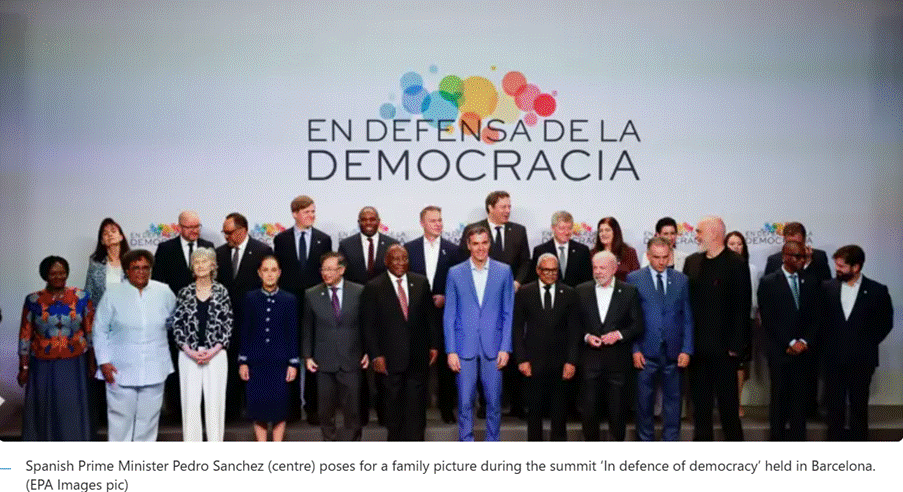
It is interesting and clever I think that these left-leaning leaders have chosen to brand their summit as a ‘Defence of Democracy’. Democracy is normally perceived as a good in itself, something above ideologies of left and right. This I think is true. It is also true that not just the right, but the left too can be anti-democratic and authoritarian.
But equally, ultimately, I think the demise and denigration of democracy harms the powerless far more than the powerful. This is because politics offers a way to balance human interests that is an alternative to a balance based instead on wealth or power.
So, I think we need to fight the cynical rejection of politics. We must always maintain that politicians are not all the same. That it is vital that we support politicians who are good at politics whilst strongly focused on building a better world.