

In a recent piece, a colleague reflected on a familiar phrase, “we will be laughed out of the room.” The “room” is where decision-makers determine what counts as serious or politically possible. His argument was that NGOs and campaigners too often tailor technical proposals to the room instead of demanding radically more and helping build a different room.
I agree. But I think there is a missing question. What makes a demand powerful?
Institutional advocacy often assumes the room is neutral, its occupants await a proposal, and the limits of what we can ask are fixed rather than shaped by politics and power. But a demand is not powerful simply because it is radical. Radicalism can clarify, but it can also avoid the harder work of organising, negotiating and winning change. In my view, moral clarity must come from evidence, judgement, law and lived experience.
For Palestinians, this is not abstract. During a genocide in Gaza and accelerating ethnic cleansing, demands once treated as beyond the pale have become the minimum required by law, morality and reality. End occupation. Ban settlement trade. Halt arms transfers. Pursue accountability. Recognise apartheid and name genocide. The question is not whether we are radical enough, but whether we are clear about what is right and strategic enough to make it harder to ignore.
None of these demands are extreme. What is extreme is that they had to be fought for while civilians were starved, bombed and displaced. For too long, debates on pauses, access, corridors, trucks and fuel obscured the choices driving mass death.
Advocacy should not make cruelty more efficient, occupation more tolerable or aid delivery more compatible with siege. I don’t think we should be campaigning for more comfortable slave ships. We should be demanding freedom. But neither should we stand safely on shore while people already aboard go without food, water or protection.
Abolition was not won by the right words alone. It took organising, legal strategies, campaigns, alliances, risk and sacrifice. A bold demand in a press release is not a movement.
Building another room cannot mean abandoning every existing one. Sometimes a technical point, made in the right room at the right moment, can be revolutionary. For someone facing bombardment or hunger, an achieved incremental demand can matter more than a perfect demand dismissed. Not everyone has thirty years to wait for justice to become realistic.
Moral clarity is not power on its own. Demands become forceful when carried by organised communities, partners, coalitions, unions, legal networks, students, diaspora groups and movements. They must be owned by those affected, not borrowed for institutional credibility.
In my view, Oxfam is not a grassroots or liberation movement, trade union or mass membership organisation. Mistaking reach for power is dangerous. Nor should we confuse sharper language with building power, bringing partners into rooms with sharing power, or alignment with movements with accountability.
Oxfam’s added value is not that we are the movement, but that we can connect the field, the street and the room. We can translate demands into policy, carry information from decision-making spaces back to those organising outside, and help make partners’ demands harder to ignore. Used well, our presence, expertise, relationships and access can turn moral clarity into political, legal and economic pressure.
This is what the Palestine work has shown. Oxfam did not invent these demands. Palestinians, partners and movements were already making them. Our role was to make them harder to dismiss through presence, technical knowledge, coalition work, legal argument and access. It was not moderation. It was strategy.
This is why operational presence and technical work matter. Communities demand humanitarian response when local systems are overwhelmed or attacked. Used badly, humanitarian work can narrow advocacy to access without confronting siege, displacement without occupation, aid without accountability, or hunger without naming starvation as a method of war. Used well, it exposes the political choices hidden behind technical language.
I don’t think the answer is to choose between being in the room, in the field or in the street. Humanitarian work can reproduce colonial power when it manages suffering without confronting what causes it. But it can also demonstrate solidarity, support protection and challenge power relations. The point is influence. It is about shifting power, resources and decision-making to community-rooted actors.
Our task is not to perform radicalism. It is to build the conditions in which radical demands become unavoidable by connecting presence to pressure, evidence to accountability, partners’ demands to political openings, and access inside institutions to power built outside them.
Saying genocide, apartheid, occupation and ethnic cleansing matters. But so do concrete demands and actions. Stop arms transfers. Ban settlement trade. Uphold international courts. End the siege. Protect UNRWA. Fund GBV protection. Resource women-led organisations and organisations of persons with disabilities. Reject displacement and containment.
So, in my view, the question is not whether we used the most radical word or demand available. It is whether we shifted power. Did we help partners’ demands travel further? Did we make it harder for governments to hide behind ambiguity? Did we connect humanitarian evidence to political accountability? Did we use access to open space, not close it? Did we strengthen the people closest to the crisis, or borrow their legitimacy?
Radical demands need power behind them, and a strategy to build it. Oxfam’s role is not to pretend it is the source of that power, but to use its evidence, presence, relationships, voice and access to help build it.
The task is not only to enter the room. It is to build power outside it, carry that power inside when needed, and never forget who the room was built to exclude.
END.
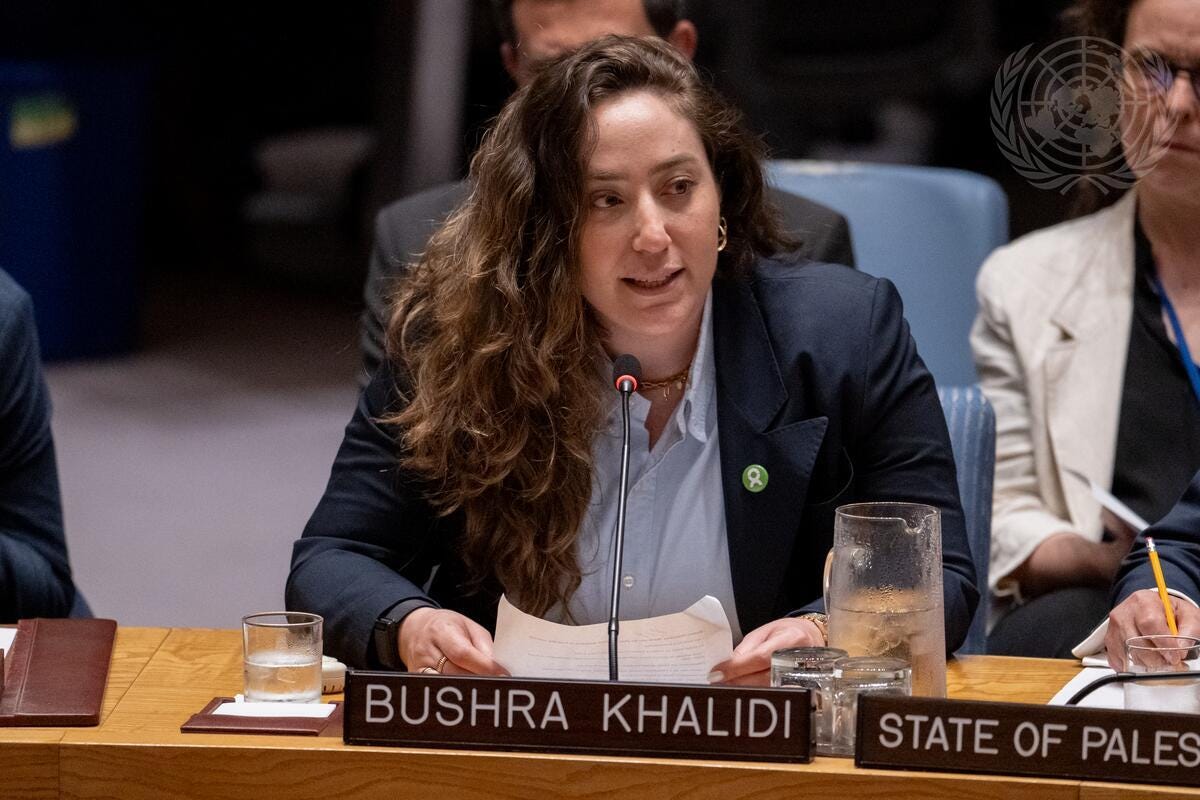
Author: Bushra Khalidi is the Oxfam’s Global Humanitarian Policy Lead.
Disclaimer: This piece reflects author’s views and should not be read as an institutional position of Oxfam.
Thank you 💚
Thanks for this, Bushra! Your words inspire me as an Oxfam colleague.