


A recent UK drama-docu series Dirty Business has got people across the country up in arms over private equity ownership draining UK public services. Unfortunately, Thames water is just the tip of rotting refuse mound at the core public services, for both the UK and the rest of the world.
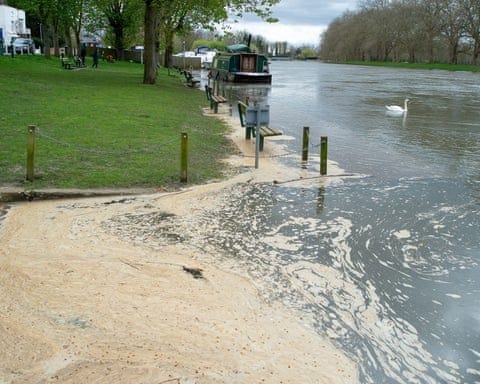
“They are good at what they do,” confides the beleaguered and disillusioned civil engineer Mikey Lazarus in Channel 4 News’ new series. “After they bought us, Macquarie [private equity firm] bought up our offices and then leased them back to us.”
What the character is referring to here has a name – a very unsexy one. It is called ‘dividend recapitalisation’ and is a very common tactic for private equity firms that buy up companies delivering public goods – from water to care, ambulances to prisons – and then work quickly to drain as much money from the company as possible. Before they sell up and moving on, that is.
Watching Dirty Business reignited an old injustice furnace that was first kindled whilst working on Oxfam’s Sick Development report with former Health Lead Anna Marriott. This report examines the privatization and financialization of healthcare provision around the world, and exposes how profit-hungry private equity firms and other private actors, are buying up hospitals in low-income countries – under the guise of ‘aid’ – and then using their old tactics to bleed them dry. Naturally, those that suffer more from this vampiric approach are the patients who face inflated costs and hopelessly low standards of care. Sick Development exposes the rot at the core of a neoliberal, private-sector-first approach to development.
Listen to this EQUALS episode with Anna Marriott and Dr Aquina Thulare on the cost of health privatisation around the world.
The tactics employed by private equity firms exposed in Sick Development are not new. In fact, they have been incubated by private equity firms across the UK and the US for years before being exported into other, less regulated contexts. An old colleague, Abha Jeurkar, and I examined an existing body of research on the privatisation of the Care sector across the UK to understand the impact. Spoiler: private equity firms are draining more than just the UK’swater ways.
In the 1980s, more than 90% of beds in care homes in the UK were provided by publicly owned care homes, and only 10% by independent providers. By 2016, this was reversed, with 90% of residential care now being delivered by independent providers, predominantly for-profit organisations. In fact, three of the biggest five care home groups that currently provide 20% of publicly funded care home beds in the UK are owned by private equity.
Private equity firms typically aim to double their money in three years or treble it in five years. Such steep returns often necessitate dramatically cutting cost by gutting companies, selling large assets and making swathes of the workforce redundant: one study in the US found that private equity firms have so far been directly and indirectly responsible for 1.3 million lost jobs across several sectors.
In the care sector, this manifests in big providers squeezing their staff and seeking to “optimise” the number of beds to ensure staff costs and overheads are kept to a minimum; they favour 60 – 70 beds per homes – despite research indicating that smaller care homes of 10 beds or fewer generally provide better outcomes. This is all done so they can continue to routinely offer 11% returns to investors. In fact, analysis found that private companies running care services took a whopping £250m in profits in just three English regions over the course of three years.
And what of the residents of these care homes and their workforce? The entirely predictable outcome of this erosion of the workforce and resources is deteriorating standards in these homes, with too many residents, too few staff and too little resources to deliver a high-quality service. In one case in Lancashire, a man named Norman’s family paid £1,000 per week for his place in a care home owned by the UK’s biggest care home operator, HC-One. The quality-of-care Norman received was poor and he ultimately died after suffering two falls and a stroke. In the subsequent investigation, HC-One apologised for the standard of care that Norman received and acknowledged that there was a problem with staffing and medication at the home. Despite this, the family paid £125,000 in total by the time of Norman’s death.
In another one emblematic case, the Four Seasons Care Home group – formerly one of the UK’s largest care home groups – was bought private equity firm Alchemy Capital and subsequently underwent round after round of buyouts by different private equity firms, each buying the firm at a higher cost and issuing more debt to cover the shortfall. By 2008, Four Seasons had accrued an external debt of over £1.5 billion and were liable to pay an annual interest payment of £100 million. Four Seasons was finally forced into default for being unable to make the debt repayments, and collapsed into administration in 2019 putting the homes and futures of some 17,000 elderly and disabled people and 22,000 employees at risk. Now, Four Seasons is in the final stages of winding down, with its remaining homes sold and parent companies moving into liquidation.
Whilst there is abundant evidence on the insidious influence of private equity on care in the UK and US, this creeping financialisation extends beyond these geographies. The case of Thames Water presented after the decades long investigation of Ash Smith and Peter Hammond in Dirty Business should be seen as emblematic of both what is going on in UK public services more broadly and what is happened to global public goods around the world. With contaminated water in the UK public consciousness, the time is right to point to the rising tide of private equity ownership across a much wider range of public services – and crucially, as this blog highlights, in care.
In an age where shocking docu-dramas are seemingly manifesting more policy change than lobbyists shouting into the void – doffs cap to Gwyneth Hughes and Toby Jones – I’m left wondering, when will the series on the contagion of private equity in care take to our screens? Whilst it is great to see light being shone through the murky waters that is the Thames Water scandal, we need to widen our gaze and see this case for what it is – a symptom of the insidious role of profit-hungry private actors in public services.
END.
Author: Harry Bignell, EQUALS podcast project manager.
Listen to our latest podcast episode on inequality in Norway.
