



A revolutionary, racist, and revolting idea
A core idea on the right is that of the ”Great Replacement Theory”―that so called ‘globalist elites’ in charge of rich countries are deliberately seeking to undermine, reduce, and ultimately replace white people. Related to this is the concept of remigration, which refers to the mass deportation of non-white immigrants, regardless of their citizenship status.
Remigration as an idea began circulating in the early 2010’s but did not really break through until 2023-24. It is now well and truly in the mainstream and has been backed by far-right leaders across the EU, US, and beyond, parties who are either in government or leading in the polls. Relatively suddenly, the horrific, disgusting idea of the mass deportation of people because they are not white has become normalised.
Hayek had no friends for years
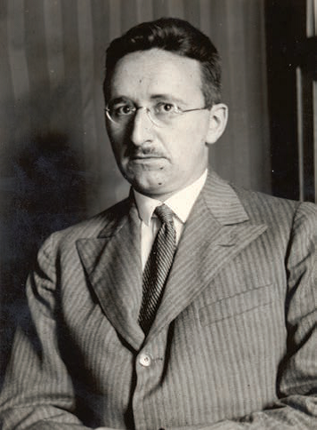
Friedrich Hayek, the godfather of neoliberalism, was a very lonely man for a long time. His ideas were deemed so revolutionary, so entirely out of step with the mainstream, that he struggled somewhat to get a job in any university.
To his huge credit, that never stopped him fighting for what he thought was right. I really wish he had given up. Yet he kept plugging away, fighting for what he thought was right, and what he thought should happen in the world. His ideas went on to become some of the most influential and of the last forty years.
A tale of two Frenchmen
The French economist, Gabriel Zucman has had extraordinary success in pushing to normalise the need to tax the super-rich. His main proposal is that the super-rich pay taxes equivalent to 2% of their wealth each year.
Conversely, his mentor and friend Thomas Piketty, together with the team at the World Inequality Lab, are calling for a tax on billionaires of 20%, in their recent Global Justice Report. (Zucman actually made this point too in his brilliant book with Emmanuel Saez, The Triumph of Injustice- saying that if the aim is to reduce inequality and deconcentrate wealth we need a rate of 10%, not 2%.)
These are of course two very different proposals- one moderate, one revolutionary. One would raise a lot of money for good things; one would eliminate billionaires in twenty years.
The question is do they conflict or are they complimentary?
Debates within Oxfam
A few years ago, our annual inequality paper, published for Davos, was called ‘Survival of the Richest’, and that year focused on the urgent need to tax the super-rich. When writing it we had to decide what we were going to call for ―what kinds of taxes and at what level.
Starting from first principles, we all agreed that we needed tax rates that were not just going to raise money, but that were actually going to reduce the level of wealth inequality in the world, not just slow its increase.
We did the numbers and found that rates of around 17% would achieve this. But then the debates began. We could not, many believed, call for such high rates of wealth taxation. These were pie in the sky. We would be “laughed out of the room.” Whilst we modelled what this would do to billionaire wealth, we in the end decided not to call for such high rates.
My own view is that as Oxfam, we should have, and that by doing so we should have pushed the boundaries of what was possible, in turn making the brilliant proposals of Zucman seem like the more palatable ones to politicians and decision makers. That by demanding these high rates we would be firstly demanding what was actually required to end the evils of extreme wealth concentration, and secondly stretching the bounds of what was politically possible and practical.

Laughed out of whose room?
Over the years, working on different topics, I have regularly heard that expression, ‘we will be laughed out of the room.’ For me it is quite revealing of a specific understanding of how change happens in the world, and one I think is wrong.
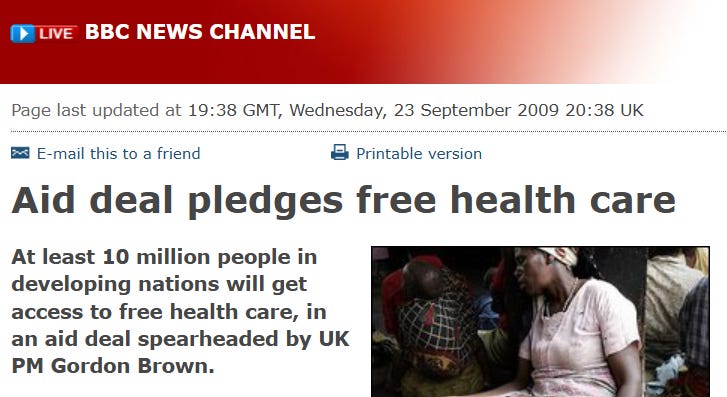
For a start, it presupposes that we are in the “room” in the first place. We are sometimes. It has happened to me a handful of times in my life. I remember working with Gordon Brown when he was UK Prime Minister with my colleague Anna, helping them create a plan to fund free healthcare in a series of countries in Africa. It was truly exhilarating ―every advocate’s dream. The plan was implemented, and millions of people got free public healthcare as a result.
But these moments are very few and growing fewer still.
The other thought behind this view is that we are in those rooms because of our moderate, technical and sensible proposals, and that conversely, if we start calling for radical, revolutionary things, we will not be invited back into the room again.
Demanding the stars
I really don’t agree with this. In fact, I think it is the opposite. That unless you demand the stars, you have no chance of getting the moon. If you go into the room with a sensible, technical proposal to go to the moon, then you will never leave the Earth.
Together with many others, we campaigned for years to make the case that healthcare should be free. That charging user fees for public healthcare, as insisted on by the World Bank at the time, contributed to killing huge numbers of people each year, denying healthcare to babies, to pregnant mothers, to the elderly. Together we built that room.
It is my strong belief that radical proposals are not just the right ones, but also by far the most tactical and strategic. They do not conflict with moderate ones. They create the space for them.
This is what the right do- their horrible, radical, and racist proposals do not prevent them becoming more powerful. They do not stop them being influential or being listened to. Quite the opposite- they build a new, racist room, that we all then have to operate in.
Conversely calling for moderate proposals on their own, without radical ones, is I think dangerous. It closes the space of possibility as politicians will often see them not as moderate but instead the outer edge of what is being demanded. It shrinks the room. Zucman agrees; his view is that his practical proposals are made more, rather than less likely to happen because of Piketty’s more radical ones.
Sticking only to moderate, technical proposals also stops us being able to do what the left is best at, which is tell a story of a radically more wonderful society for everyone. This in turn I think undermining our chances of success. I think it is no coincidence that the number of rooms is shrinking fast.
Our future is real. Theirs is a confidence trick
Radical ideas, expressed in ways that mobilise millions of people and make them emotionally commit to a different future, are what I think truly changes the world. They shift the whole understanding of what is politically “practical.”
I also think that as progressives, we have an advantage here, as our vision for a different world is inherently attractive to virtually everyone. No hunger, no poverty. An end to climate breakdown, a wonderful planet preserved forever. High quality public healthcare, education and housing for everyone. Less work, more happiness, more trust, more community, more caring for one another.
For the right, they constantly have to make a world that is only really attractive to the richest sound attractive to everyone. Hayek was very good at this, focusing on the universal desire for freedom from tyranny, and individual choice, and using that to promote a system where freedom was only really for the rich.
But it is very hard for them. The vision of a white Europe, free from anyone whose skin colour is different, or whose origins were in another continent, is not one that is positive or has wide appeal ―its main motivation is hatred and fear, not love.
It helps to have the billionaire owned media on your side, but it remains a constant confidence trick. The constant need to convince people that something would be good for them that wouldn’t, or that their troubles are the fault of x, y, or z rather than the rich and powerful, rather than presenting a genuine, positive and exciting vision of the future.
Building your own room
For me, our job, in the NGO, campaigning and advocacy world, is to focus mainly on building a new room, and then constantly pushing to expand it. Just like the vicious visionaries who dreamt up the dystopian “Great Replacement Theory” and came up with the idea of remigration. They weren’t trying to get into someone else’s room with moderate, ‘sensible’ proposals.
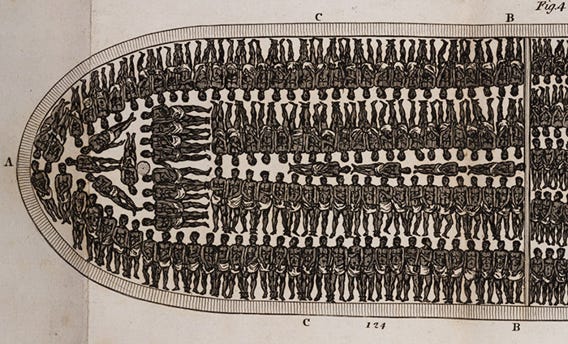
I was privy to an argument once between two of my bosses very early in my career. The debate between them was whether we should be calling for a pause in the bombing of Afghanistan to enable humanitarian aid to be delivered. One of my bosses said to the other, with a quiet fury, ‘The trouble is, X, if this were the campaign against slavery you would have us calling for more comfortable boats.’
This is what happens when you end up fighting in somebody elses room- instead we must always build our own one.
END.
Author: Max Lawson, Head of Inequality Policy at Oxfam International and EQUALS podcast co-host. He is also a visiting Professor in Practice at the LSE International Inequalities Institute and the co-chair of the Global People’s Medicines Alliance.