


COP31 began this week, and it’s hard to miss that few places on Earth have escaped the deadly effects of climate breakdown in 2026.
Flood deaths have hit a 13-year high, with at least 8,000 people killed so far this year. 106 countries have experienced at least one month of record extreme heat.
Earlier this year, devastating floods swept through Ghana, Nigeria, Côte d’Ivoire and other West African countries. The flash floods in Nepal, caused by a glacier collapse, affected over 80,000 people.
As 50,000 people died in the European heatwaves, the super-rich built snow rooms in their mansions. As families fled from wildfires, the rich were evacuated by helicopter to five-star hotels. As flash floods wiped out entire villages, luxury properties stood protected by high-end private flood defence systems.
Disasters are not caused nor felt equally. Disasters discriminate.
In part 2 of Disaster Divide, this week’s Bulletin looks at the unequal impacts of climate disaster.

Disaster divide, in numbers
Greater inequality = greater disaster. Inequality turns extreme weather events into disaster. In more unequal countries, disasters cause higher death tolls, inflict greater damage and affect more people. A study of floods in Mumbai, India, found that lower-income households had to spend 15 times more than rich households to repair and replace damaged assets. Deaths from flooding are seven times higher in more unequal countries.
Climate disasters are inequality machines. Climate breakdown acts as a force multiplier on pre-existing inequalities: the richest can weather the storm better than the rest of society. A large panel study of 158 countries between 1995 and 2019 demonstrated that increased climate impacts were linked to rising income inequality.
Gender divide. Climate impacts are also deeply unequal along gender lines. A review of 130 studies found that women and girls were more affected than men and boys by climate-related health impacts in 68% of cases. Climate disasters exacerbate pre-existing gender inequality: gender-based violence increases during and after extreme weather events, with two-thirds of studies identifying increases in intimate partner or domestic violence following floods, storms or droughts.
Billionaire migrant tech bros. Millions of people will be forced to leave their homes because of the climate crisis. If the international community fails to act, as many as 1 billion people (around 10% of the world’s population) will have been displaced by 2050.
The majority of those displaced will be in the Global South, but rich people are quietly joining their ranks.
Billionaires are buying islands and building fortified compounds and underground bunkers — tech billionaires are increasingly at the forefront of this trend. This is a form of climate apartheid: the super-rich use their wealth and power to escape the consequences of the crises they largely helped create.
Food for thought. Climate-driven shortages can be used as a justification to increase prices beyond the increased costs of production. In 2024, extreme weather damaged West African cocoa harvests, resulting in prices jumping around 230% year-on-year but accruing no gains to cocoa farmers. The same year, heavy rains in Indonesia and droughts in Brazil and Vietnam contributed to a surge in coffee prices, with a 39% increase on the previous year’s average. Coffee-trading corporations, the intermediary traders of the supply chains, made huge profits as a result.
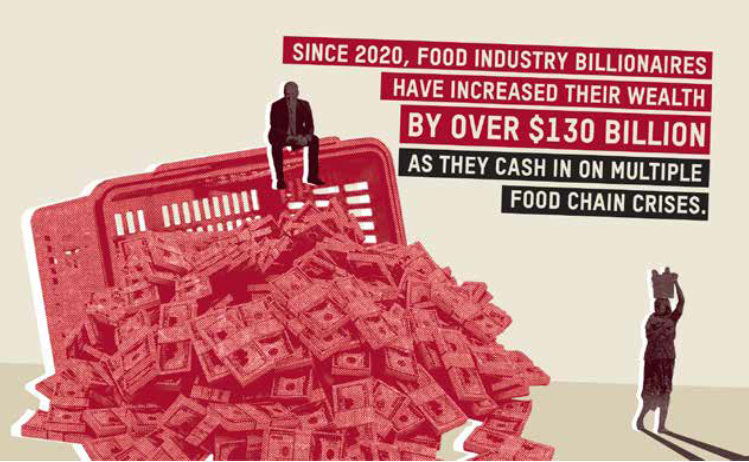
Broken food system. The food industry is dominated by some of the poorest and richest people in the world. The climate crisis causes disproportionately high rates of malnutrition and food insecurity amongst those living in poverty and huge financial rewards for some of the richest. The wealth of food billionaires has increased by more than $130 billion since 2020 in real terms as they cash in on multiple food chain crises. Cargill, one of the world’s largest food traders, now counts 21 family members as billionaires, up from 14 in 2019, before the COVID-19 pandemic.
Something to read/listen to
Track, the private jets flying into Antalya this week at https://cop.polluterjets.com/
Read, former UK PM Gordon Brown on the ‘global youthquake’.
Read, moral philosopher Vojtěch Svěrák on why we should blame the super-privileged polluter elite for climate change.

Listen, to Crismar Lujano on Equals on how media ownership and global powers shapes which stories are told about Latin America and global south.
