

The current geopolitical conflicts, economic instability, and climate crisis all have one element at their core: fossil fuel dependency, propped up by an international financial system that defends the richest. According to the International Energy Agency, the most recent military escalation, driven by the United States and Israel in the Middle East, is “creating the largest supply disruption in the history of the global oil market”. This escalation has already killed thousands of civilians and forcibly displaced millions.
Beyond this immediate devastation, the conflict is also driving wider consequences including higher energy bills, rising costs of food, deepening poverty, environmental destruction, and widening inequality whilst ordinary people everywhere will face ethe costs. It is communities in the Global South who live in poor and climate-vulnerable countries and have the least means to adapt to the growing chaos, face the brunt of the impacts – with women and girls disproportionately impacted.
Meanwhile, fossil fuels corporations are set to secure some of their best profits in history. As Oxfam research shows , fossil fuel companies are projected to earn almost $3,000 a second in 2026 while families struggle to afford energy bills worldwide.
A glimpse of hope?
The first conference on transitioning away from fossil fuels, held in Santa Marta last week, must be celebrated and it is a welcome solutions-driven process for moving away from fossil fuel dependency. Yet a key question remains over the political will to shift to translate words into action. Implementing a fossil-free future presents many political and financial hurdles, especially for the Global South that face increasing debt levels and limited support from richer countries.
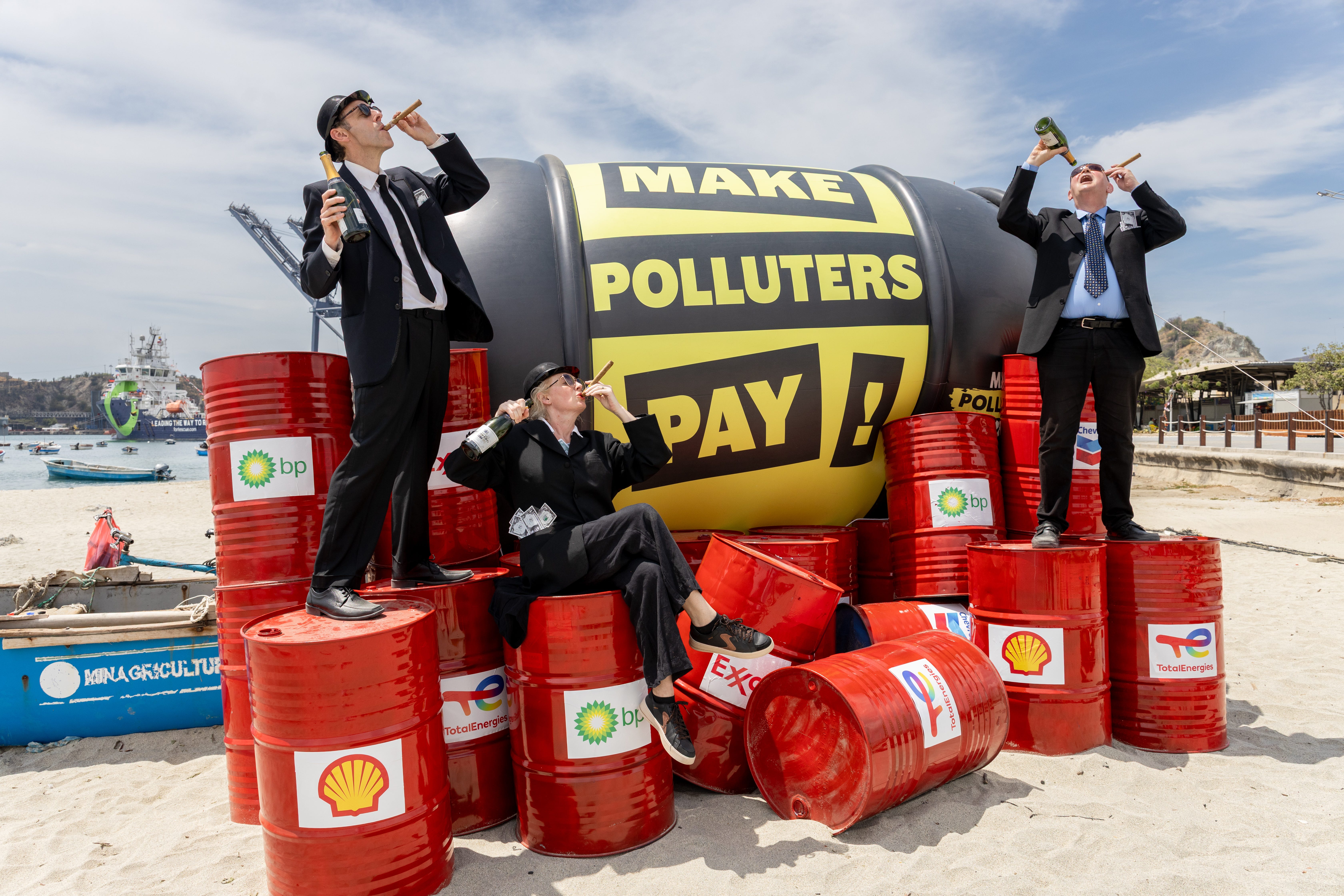
Without proper finance to fund a fair transition away from fossil fuels, low- and middle-income countries won’t be able to phase out fossil fuels as fast, or at all. Many of them are trapped into drilling oil to service their debts, not to foster development. Over 3.4 billion people live in countries that spend more on paying debt interest charges than on health or education.
This is by design. The global energy system continues to follow a colonial model, where Global North countries extract resources and labour from the Global South – in this case, oil and gas – while the richest people and governments hoard the profits. Even if developing countries want to transition away from fossil fuels, they are faced with policy conditionalities of international financial institutions that reinforce the exploitation of fossil fuels. One study found that the IMF loan agreements with 11 of the worlds poorest countries were assuming that they must continue drilling in order to repay their debts.
The current financial architecture seems to penalize rather than help climate champions. In 2023, after a historic national referendum in Ecuador, that decided against the exploration of new oil reserves the country’s credit rating was downgraded by the international financial system, increasing the costs of its borrowing.
A just transition away from fossil fuels must not replicate the colonial power dynamics of the current energy system. It must happen hand-in-hand with a reform of the international financial architecture: addressing the debt crisis, rejecting the private investor-led approach to development and climate finance, reversing the aid cuts, and making sure the finance for a just transition comes from those most responsible for the climate crisis, not the poorest and most climate-vulnerable countries.
Global South leading the way for the just transition
Despite all the challenges, low- and middle-income countries are leading the way. Colombian president Gustavo Petro, was elected in 2022, aiming to decrease fossil fuel extraction, despite this accounting for around half of the country’s exports, two thirds of final energy consumption and 3 to 6 percent of GDP.
Colombia is not alone. These efforts should be celebrated and concretely supported, not penalised. Rich, historic polluters must phase out first and faster. Rhetoric by Global North promising to address these system’s imbalances such as addressing inequality or supporting fairer debt and tax decision making forums is not translating into practice.
To end the fossil fuel dependency and fund a just transition, we need a reformed international financial system where the Global South can have a voice and meaningful participation in economic decision making: if they’re not at the table, then they will continue to be on the menu. Until then, the only people benefiting from this system are rich polluters, the super-rich and vested interests.
The momentum gathered in Santa Marta must send a clear sign to policymakers around the world to carry on the momentum for a fossil free future in other international processes such as the upcoming UN climate talks in Bonn in June, COP31 in Turkey, and the second transition conference hosted by Tuvalu and Ireland in 2027. This year, global leaders must drop the fossil fuel dependency and pave a new, fairer path.
Author: Mariana Paoli is the Climate Justice Policy & Advocacy Lead at Oxfam International.
As governments convened in Santa Marta as part of a collation of the willing to phase out fossil fuels, last week’s Bulletin looked at how oil and gas companies are profiting from the current crisis.

Listen to the latest episode of the Equals podcast with Adam Hanieh who explains why crises like war, financial shocks, and pandemics don’t stay where they start. They move through the structures of the global economy.
War, Oil, and Inequality: Who Wins and Who Loses

In this episode, Adam Hanieh explains why crises like war, financial shocks, and pandemics don’t stay where they start. They move through the structures of the global economy.