

The U.S-Israel war against Iran has inflicted significant damage on the world economy, and while the recently announced peace deal may ease immediate pressure, the fallout will linger. IMF officials have downgraded their 2026 global growth forecast from 3.3 percent to 3.1 percent, and warned that if the conflict persists, that growth rate could drop to as low as 2 percent.
For many countries in the Global South, the economic crisis is not a future risk but a present reality. Although the peace agreement may help over time, oil, gas, and fertilizer prices remain elevated and continue to drive up food and energy costs, straining hospital, school, and public infrastructure budgets. Governments already squeezed by record debt repayments are being pushed closer to default.
People living in poverty are bearing the highest costs, while many at the top are reaping huge gains. Wall Street investment banks, arms manufacturers, AI firms, and energy and fertilizer corporations are enjoying enormous profits as a result of war-related market volatility and militarization.
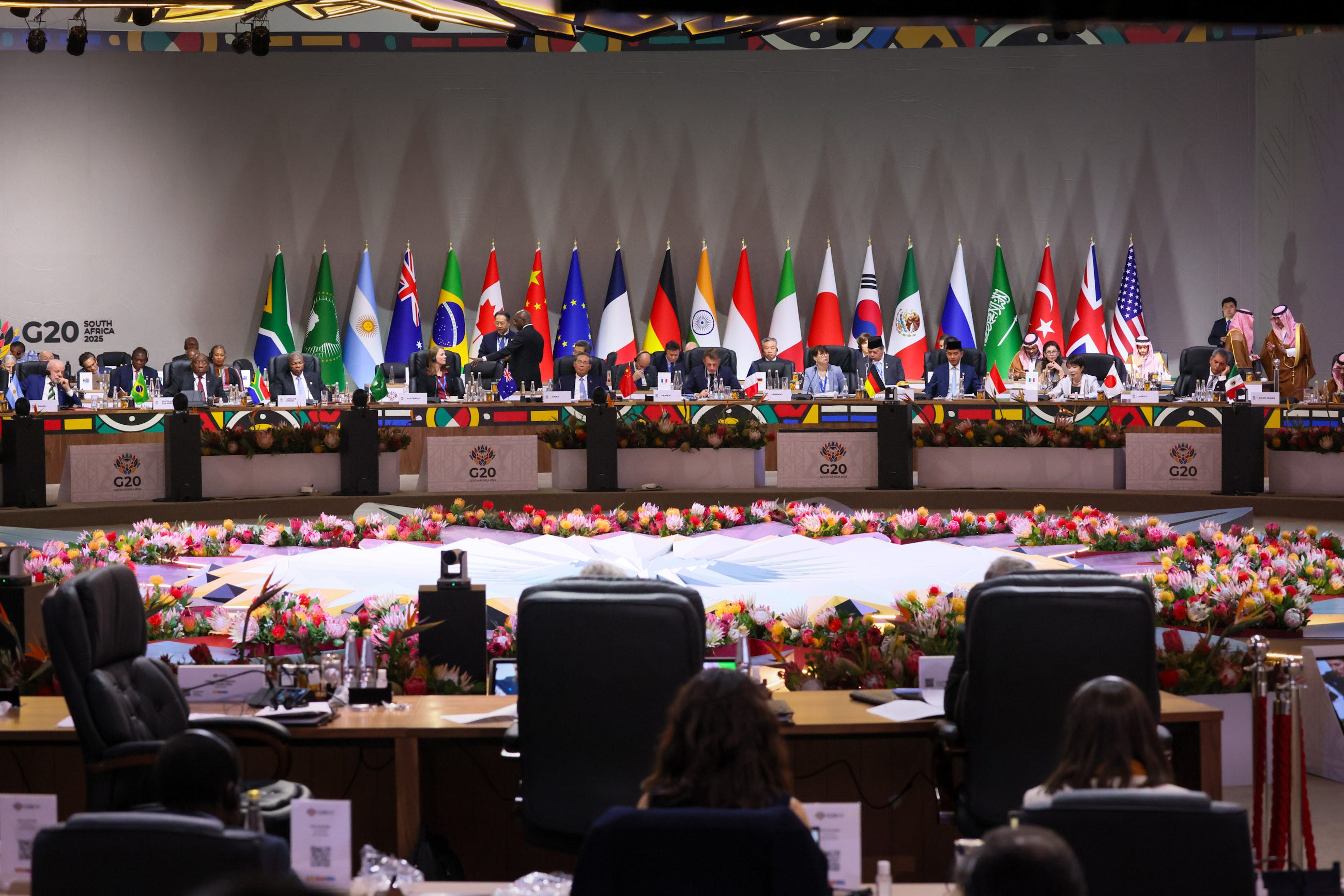
The G20, which touts itself as the world’s premiere forum for international economic cooperation, should be playing a central role. And in fact, their response to the 2008-2009 global financial crisis offers important lessons, both positive and negative. G20 member countries, which represent 85 percent of global GDP, showed that a coordinated crisis response is possible — but they also demonstrated the risks of recovery efforts that prioritize financial markets over people.
The G20’s Emergence
During the 2008 financial meltdown, G7 countries acknowledged that recovery required the involvement of rapidly growing economies like China, India, and Brazil, leading them to elevate the G20 from a forum of finance ministers and central bank governors into a leaders’ summit process. Over the course of three summits, G20 governments coordinated the largest synchronized fiscal and monetary stimulus in history, committing trillions of dollars through increased public spending, expanded IMF resources, trade finance, and measures aimed at supporting growth and debt sustainability in affected countries.
Beyond macroeconomic stability, labor organizations and civil society groups fought hard — and successfully — to shape the recovery agenda to include measures to protect jobs and livelihoods. The financial crisis eliminated an estimated 34 million jobs globally, but coordinated stimulus measures helped avert a far deeper, depression-level collapse.
The Limits of Finance-Focused Crisis Management
Despite these achievements, G20 country recovery efforts exposed the limits of a crisis strategy focused primarily on stabilizing financial markets. Moves to regulate the financial sector were remarkably timid. Proposals to tax banks and global financial markets through a Financial Transaction Tax, proposed by the UK at the G20, were quietly shelved — a move that would have brought in hundreds of billions of dollars while helping curb excessive speculation and financial risk taking, which remain persistent challenges today.
The G20’s initial commitment to coordinated stimulus quickly gave way to fiscal consolidation and austerity, particularly after the European sovereign debt crisis in 2010. Following the global financial crash, several countries in Europe faced rising borrowing costs and fears that they would default on their debts. In response, European governments and international institutions imposed sweeping austerity measures — deep cuts to public spending, wages, and social services, along with weakened labor rights — in exchange for financial support.
The shift toward austerity and deregulation marked a turning point in the global recovery. Many governments moved away from protecting jobs and public services, focusing instead on reducing deficits, weakening worker protections, and reassuring financial markets. As former TUAC General Secretary John Evans later observed, this premature turn to austerity “led to stalling of global growth and job creation.”
The long-term consequences are still visible today. The decade after the financial crisis saw rising wealth concentration, growing corporate power, stagnant wages, and deepening sovereign debts. While financial markets recovered, ordinary families around the world faced years of heightened economic insecurity and weakened public services.
Lessons for the G20 Today
The response to the 2008 crash showed that the G20 can act quickly and mobilize enormous resources when the global economy is under threat. But while governments moved rapidly to stabilize markets, they paid far less attention to the inequalities and structural vulnerabilities that made the crisis so devastating to everyday people. The premature shift to austerity and deregulation undermined many of the gains of the initial response.
The COVID-19 crisis provides an additional example. G20 countries showed some learning within their own borders by providing significant emergency aid to households and workers. But the response overall deepened global inequalities. Vaccine distribution was highly unequal and while advanced economics invested trillions in stimulus, low-income countries remained constrained by debt and credit downgrades. The allocation of $650 billion in Special Drawing Rights in 2021 provided vital liquidity, but this aid was allotted based on IMF quotas rather than need. Africa – home to 18% of the world’s population – received only 5 percent of the total.
Our 2025 report, The G20 at a Crossroads, produced jointly with analysts from Brazil, South Africa, the UK, and elsewhere, concludes that the G20 has at times been effective at “fighting fires,” but far less successful at addressing the underlying conditions that produce instability and inequality.
Those lessons matter today. The U.S.-Israel war against Iran has raged alongside climate disasters, debt distress, food insecurity, and precarious work — interconnected pressures within a global economy already shaped by profound inequalities.
The G20 response to these challenges should focus not merely on preventing a deeper economic shock, but also on protecting people and building long-term resilience. Success should be measured not just by GDP growth or market recovery, but by whether countries — especially in the Global South — can maintain healthcare systems, protect food security, improve conditions for working people, reduce sovereign debt burdens, and preserve fiscal space for public investment.
There is no scarcity of practical proposals for moving the G20 in this direction.
A global civil society statement organized by Eurodad, for instance, identifies measures to counter the current war-related crisis, including immediate debt payment suspension for affected countries, cancellation of all unsustainable and illegitimate debts, and a new allocation of Special Drawing Rights, an international reserve asset maintained by the IMF, for countries most in need of support.
A statement to G20 leaders by the L20 group of international trade unions lays out an agenda for guaranteeing rights and reducing inequalities in ways that would make the world more resilient in the face of current and future crises. For example, they call on G20 governments to adopt national living wage targets as well as public investment targets as a percentage of GDP to address climate change and ensure quality public health care and education.
At this moment of escalating economic crisis, the central challenge remains political will. The Trump administration, which holds the G20 presidency this year, has set out an agenda that prioritizes the interests of the wealthy and big corporations, even as global instability deepens. G20 leaders face a defining choice: follow this path and let the burden continue to fall on the most vulnerable, or seize this moment to transform the G20 into a body capable of addressing the structural inequalities and vulnerabilities that weaken the global economy and amplify the human cost of crises.
END.
Authors: Reyanna James is a research associate at the Institute for Policy Studies (IPS) in Washington, DC. Sarah Anderson directs the Global Economy Project at IPS. Both are co-editors of Inequality.org and its related weekly newsletter.
This is the second entry in our new G20 In Flux blog series, unpacking the key issues shaping the US-led G20. Our first entry explores how powerful countries compete over critical mineral supplies and how Latin America is being reshaped through mining, exports corridors, and threats to Indigenous lands.
Washington, Santarém and the Role of Oligarchs in the New Race for Critical Minerals

This year, the U.S. holds the presidency of the G20, a multilateral forum featuring many of the world’s largest economies, including China. Yet the U.S. has largely not used the G20 to advance discussions on restructuring critical minerals markets. Instead, a few weeks before attacking Iran, the Trump administration convened a separate
Subscribe now and follow the series as we explore what’s at stake for the global economy and beyond.