


The rise of the far right, and of fascism is all around us, all over the world. It is vitally important now more than ever to learn from history, from the rise of the far right in the 1930’s, what attracted people to fascism, and how people organised to fight back.
90 years ago, in East London, fascists mobilised to march through a very poor Jewish area. At Cable Street, tens of thousands of people from different communities stood together and refused to let them pass. This confrontation is today known as the Battle of Cable Street.
At the same time, the Republicans were fighting against the fascists in the Spanish Civil War, and many young people from Cable Street went on to fight in Spain.
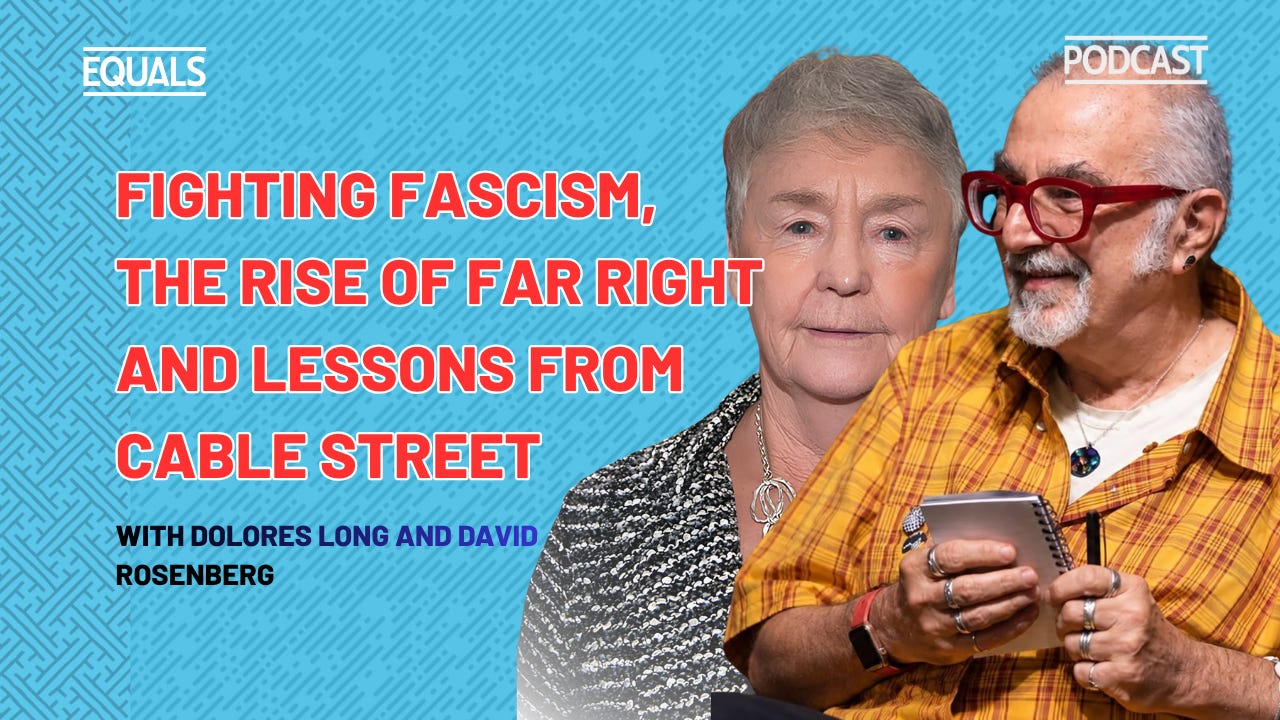
This week, historian David Rosenberg and campaigner Dolores Long, whose father fought in Spain, explore what made that antifascist resistance possible. They join Max Lawson and Maaza Seyoum to connect Cable Street and the fight against fascism in Spain to what is taking place today all over the world, with the rise of far-right politics and increased racism, especially towards migrants.
Together they examine how far right movements attract support across social classes and reflect on the need for solidarity across communities and the importance of working-class history and political education.
If you enjoy the episode, please like, share, comment, and leave us a review. Follow us on X @EQUALShope and on LinkedIn.
This is our second episode of the new season. Listen to our first episode with Branko Milanović on the changing global economic order.


