

Nepal, like many countries in the Global South, contributes very little to global emissions, yet its people suffer a disproportion share of the consequences when climate disasters strike. The catastrophic floods that struck Nepal in August this year and the subsequent global failure to deliver anything close to a just response in the aftermath is a clear reminder of what this inequality looks like in the context of the deepening climate crisis.
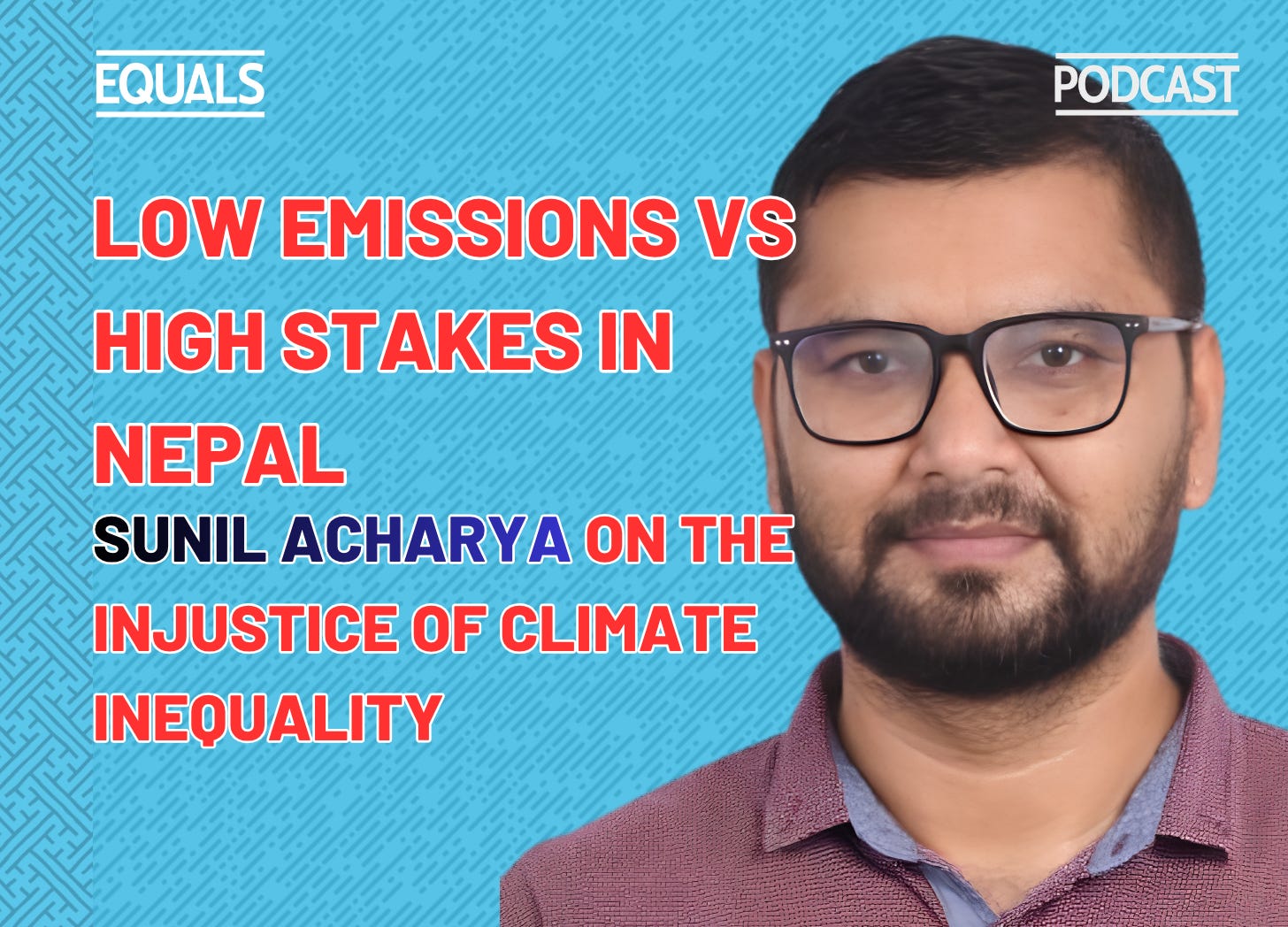
As COP31 starts this week, we speak with Sunil Acharya, Global Just Transition lead at Recourse, about the impacts of the floods, what the global response has looked like and how Nepal’s experience reveals the inequalities at the root of the climate crisis.
This conversation also examines the enormous gap between international promises of climate solidarity and the actual support reaching affected people. For Nepal, the recovery cost following the floods is estimated to be more than US$4 billion, but the loss and damage fund just set aside US$ 21.6 million. This money is also trapped behind layers of approval processes, meaning it takes time to reach the affected people.
As Sunil says, ‘That is not justice. That is justice delayed.’
Sunil calls for rich countries, corporations and polluters to take responsibility of their pollution and pay for the damages that they have caused. He argues that government and global institutions must put people and planet before rich people’s interests and profits. He urges CSO’s, activists, and campaigners to work together to challenge unequal power structures that driving the climate crisis.
If you enjoy the episode, please like, share, comment, and leave us a review. Follow us on X @EQUALShope and on LinkedIn.
Read Oxfam’s new report, Disaster Divide and our latest bulletin that breaks down the findings of this report.
Climate disaster capitalism pays double dividends to the super-rich

When Oxfam published its first climate inequality report in 2020, it was barely recognised that inequality was at the core of the climate crisis. Today policy makers recognise that it’s not just rich countries but rich people who bear a disproportionate responsibility for the climate crisis.
In our blog section, we featured Vojtěch Svěrák, who offered a moral perspective on why we should hold super-rich polluters responsible for climate change.
Why we should blame the super-privileged polluter elite for climate change

The polluter elite is a group of millionaires and billionaires with interests in carbon-intensive industries, especially fossil fuels. They are powerful investors, managers, CEOs, or owners. Oxfam has published several reports mapping their immense carbon footprints and the activities by which they maintain structures of the carbon economy.


