


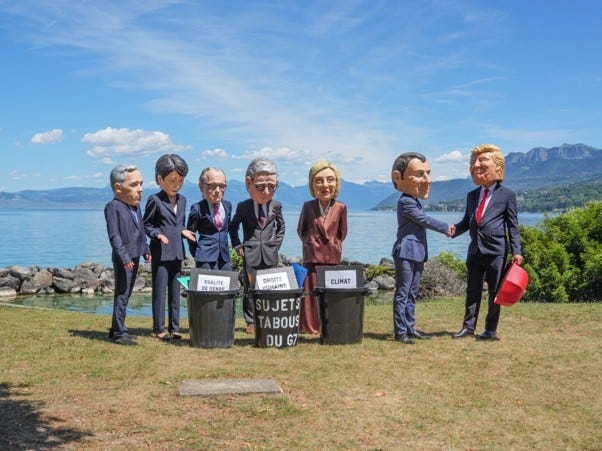
The G7 meeting was held in Evian, France, this week. Just to secure President Trump’s attendance at the summit, President Macron agreed to ignore discussions on climate breakdown and spiralling inequality. Most of all, any coordinated responses to overlapping global crises have been sidelined.
Three months of the illegal U.S-Israel war against Iran have caused food, fuel and fertiliser prices to rocket, deepening debt pressure and pushing public services and humanitarian systems, already stretched beyond breaking point, to collapse.
The war doesn’t come in isolation. Since 2020, there have been at least five global-level shocks to the economic system. Each crisis compounds on top of the others, fuelling further inequality and suffering.
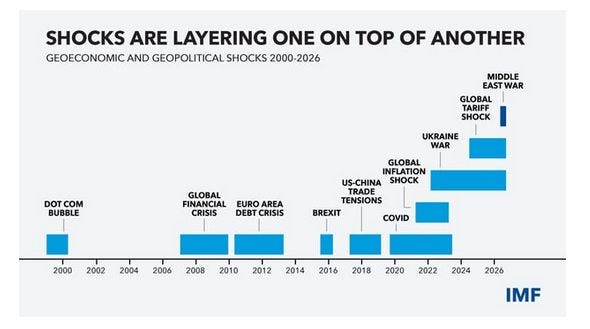
In this week’s Bulletin, we’re taking a stock check of who is benefiting and who is suffering from these compounding crises. Of course all of the estimates come with a high degree of uncertainty, which now hinges on whether the peace deal will hold. Regardless, there will be far-reaching consequences of the war.
Overlapping global crises…in numbers
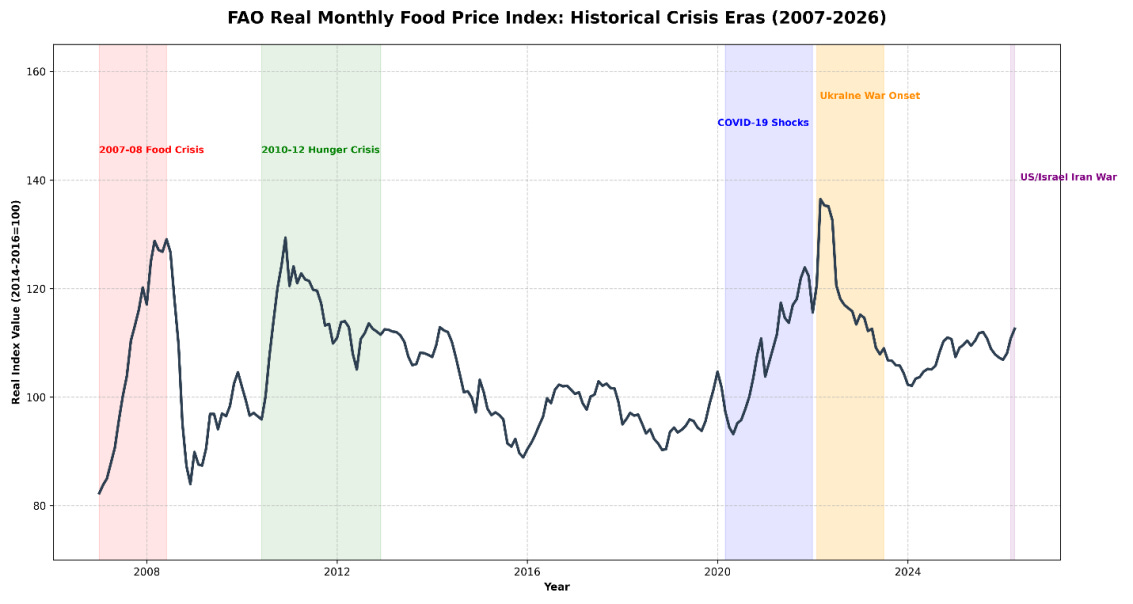
1/ Soaring food prices. Food prices rose 3.4 times faster between February and April 2026 than during the same period last year. Before the war against Iran, 720 million people were already facing hunger. In March, the UN projected that if fighting continued until June, 45 million people will be pushed into extreme hunger. For women smallholder farmers —a huge share of food producers in the Global South— soaring fertiliser costs are a direct threat to their livelihoods.
2/ Vanishing aid. Between 2024 and 2025, G7 countries cut $48 billion from their aid budgets —a 29% drop, the largest decline in history. In 2025, 65% of UN humanitarian emergency plans went unfunded. The humanitarian aid G7 countries provided amounted to just 0.75% of their military spending in 2025. 44 people fell into a humanitarian emergency every minute since France last chaired the G7.
3/ The debt trap is set. 3.4 billion people now live in countries that spend more on sovereign debt interest than on healthcare or education. As US bond yields hit levels not seen since 2007, low- and middle-income countries that borrow in dollars face rising costs, too. Wealthy creditors win. Everyone else loses.
4/ Millions pushed into poverty. Before the war, the World Bank had projected global poverty would fall by 25.5 million people in 2026. Instead, the UNDP estimates the war will push more than 32.5 million into poverty by year’s end. The 2020s, already dubbed a “lost decade” on poverty reduction, are shaping up to be a golden era for the ultra-rich.
5/ War, who is it good for? Billionaires, as it turns out. Energy billionaires in G7 countries have pocketed $301 million per day since the US-Israel war against Iran began. Overall, billionaire wealth has surged by nearly $10 trillion across the fifth global economic shock since 2020. Energy billionaires alone have seen their wealth grow 14 times faster than billionaires overall.
6/…and Big Oil and fertiliser companies. The top six oil companies are on track to see profits surge 80% - or $68 billion - compared to pre-war forecasts. Six of the biggest fossil fuel firms are projected to earn $3,000 every second this year.
Three of the world’s biggest fertiliser corporations expect profits to jump 23% above pre-war forecasts. Fertilisers are now scarcer, and farmers across the Global South are being forced to plant less.
7/ Wealthy investors are doing well. More widely, the stock market has hit multiple highs in recent months. Major global financial institutions and banks are seeing profits surge amid heightened trading activity. UBS’ investment banking arm alone reported a 27% revenue jump in the first quarter of 2026 due to record trading activity. The wealthiest individuals control the stock market. In the US, the richest 1% own half of all corporate equities and mutual fund shares, while the bottom 50% hold just 1%. 85% of the world have no income from capital at all.
Something to read and listen to
Read Oxfam's briefing, “Ending Impunity and Inequality,” published ahead of the G7 in Evian.


