

This week Finance Ministers from across the world will attend the IMF–World Bank meetings in Bangkok, Thailand, and Kristalina Georgieva, the IMF’s boss has called on governments to implement swingeing cuts to their spending and increase costs of basic goods- known as austerity measures. As governments face an increasing debt crisis and rising global tensions these cuts are presented as unavoidable. But is this true?
In this episode, Isabel Ortiz, one of the world’s leading experts on austerity, examines how this has become a global norm, harming billions of ordinary people. She explains how policies presented as technical reforms are in fact deeply political, benefiting the rich, deepening inequality, shifting the burden onto ordinary people and fuelling growing public anger
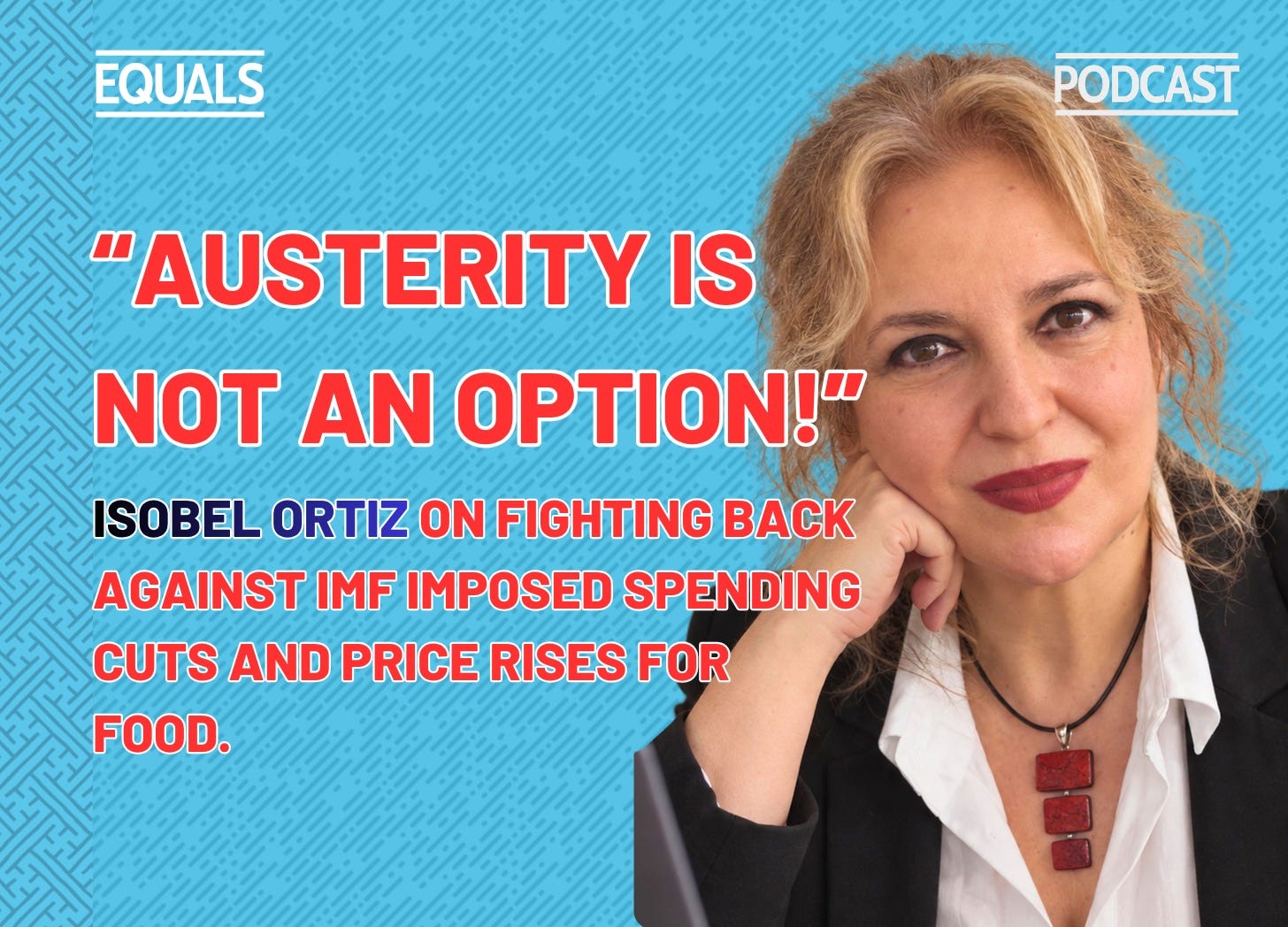
.She explains how the IMF and national governments in drive austerity, why the claim that there is no alternative is a lie, and what other choices could look like. From taxing the rich and tackling illicit financial flows to restructuring debt and investing in essential public services, Ortiz suggests practical alternatives to policies that leave so many people paying the price.
Time to fight back against austerity!
If you enjoy the episode, please like, share, comment, and leave us a review. Follow us on X @EQUALShope and on LinkedIn.
Our latest Bulletin examines the IMF's growing demands for spending cuts and the shrinking safety nets meant to protect people from their impact.
The IMF quadruple down on austerity

The 2026 Annual Meeting of the International Monetary Fund (IMF) takes place in Bangkok, Thailand next week. Already, their Chief, Kristalina Georgieva, is urging a return to austerity. For 25 countries, this isn’t a suggestion but a demand.


